Pet care platform · 2021
Helping new pet owners find care with confidence.
- ROLE
- UX Designer
- TEAM
- 2-person team
- DURATION
- 3 months · 2021
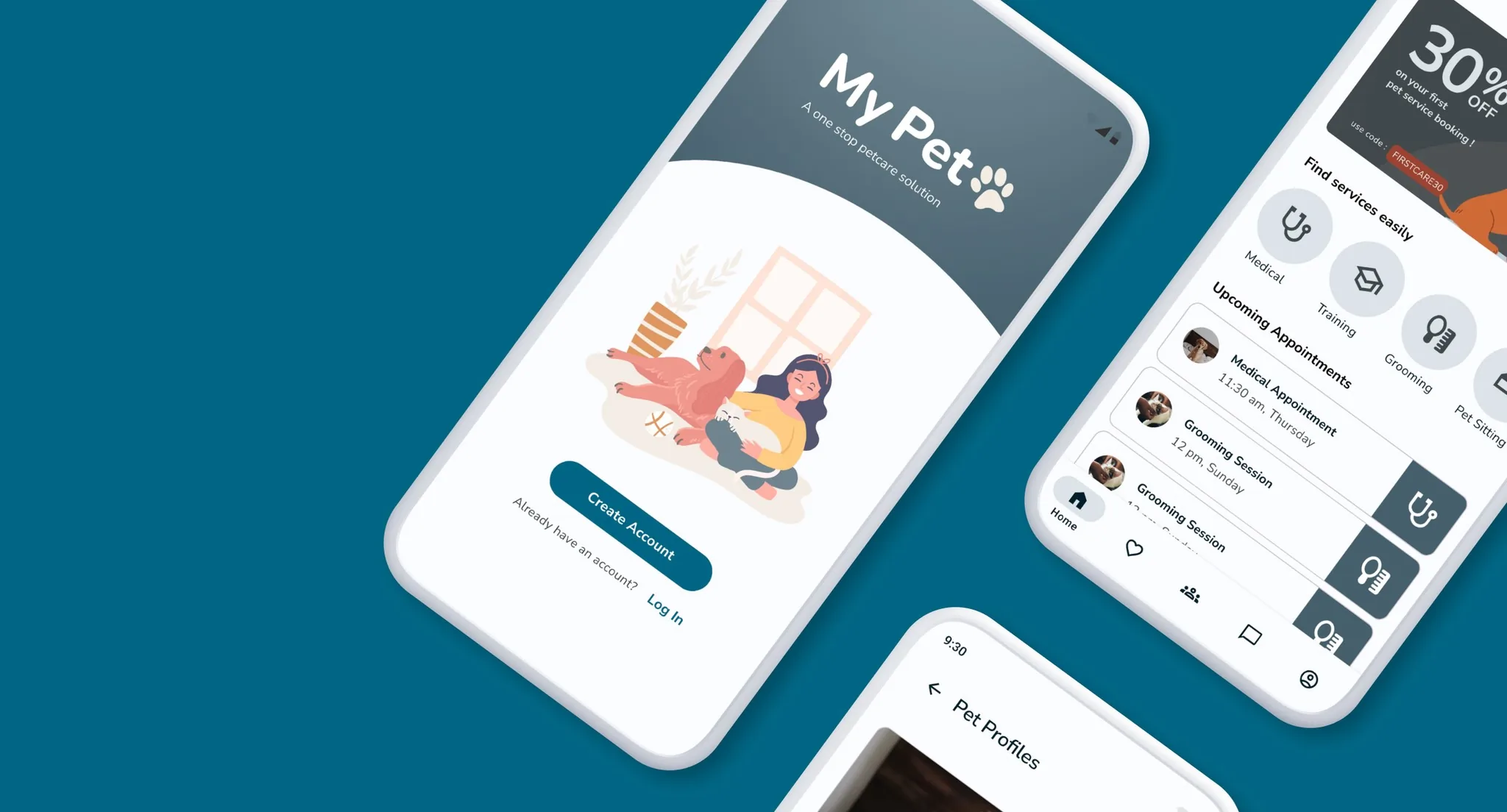
My Pet is a mobile pet-care concept focused on novice owners in Kerala. In this two-person project, I contributed more to the research and understanding user needs. Together, we explored how local service discovery, appointments, and pet information could support the responsibilities of ownership.
The care challenge
Finding care also meant deciding whom to trust.
For novice pet owners in Kerala, ownership could bring excitement alongside uncertainty and responsibility. Finding a service was only part of the task: owners also needed to judge whether the care and information were dependable.
My Pet explored a mobile concept bringing local care, appointments, guidance, and pet records together. The core journey connects choosing a provider with managing an appointment, supported by pet records and care information.
The local care context
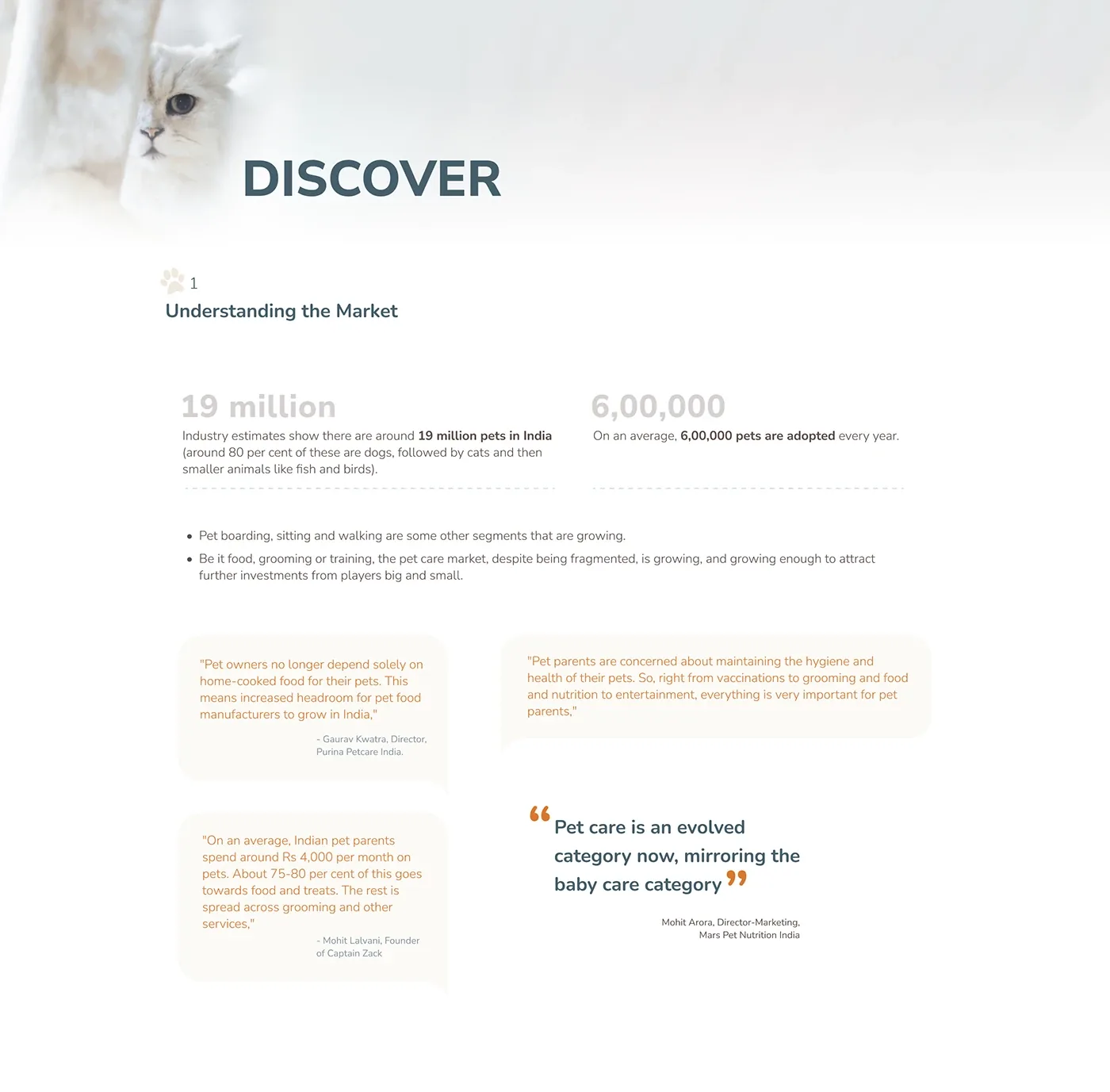
The market study frames the Kerala pet-care opportunity at the time of the project.
Owner insights
Trust and discoverability shaped the direction.
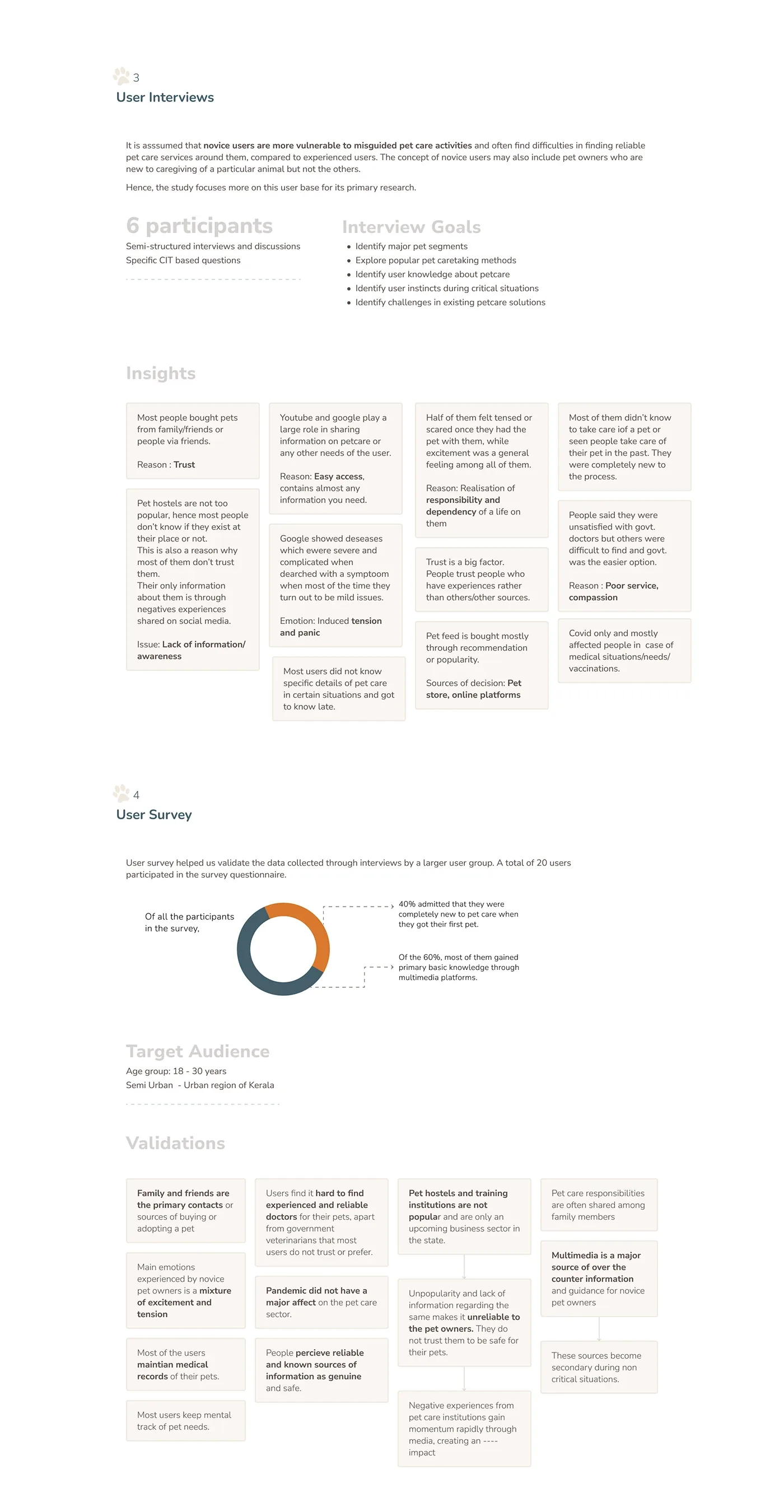
The research included semi-structured interviews and discussions with six participants, using critical-incident questions, followed by a survey with 20 users. It explored care practices, knowledge, critical situations, and difficulties with existing services. The target audience was 18–30-year-olds in semi-urban and urban Kerala; 40% of survey respondents said they were completely new to pet care when they got their first pet.
Family, friends, and people with first-hand experience were important sources of guidance. Some services, including boarding and training, were difficult to discover or assess. New owners also described uncertainty, and broad symptom searches could create unnecessary anxiety.
These findings made confidence in finding care a useful focus for the concept. The small study informed the concept; broader research would be needed to establish how common these behaviours are across pet owners.
Hear from owners, then synthesise their needs
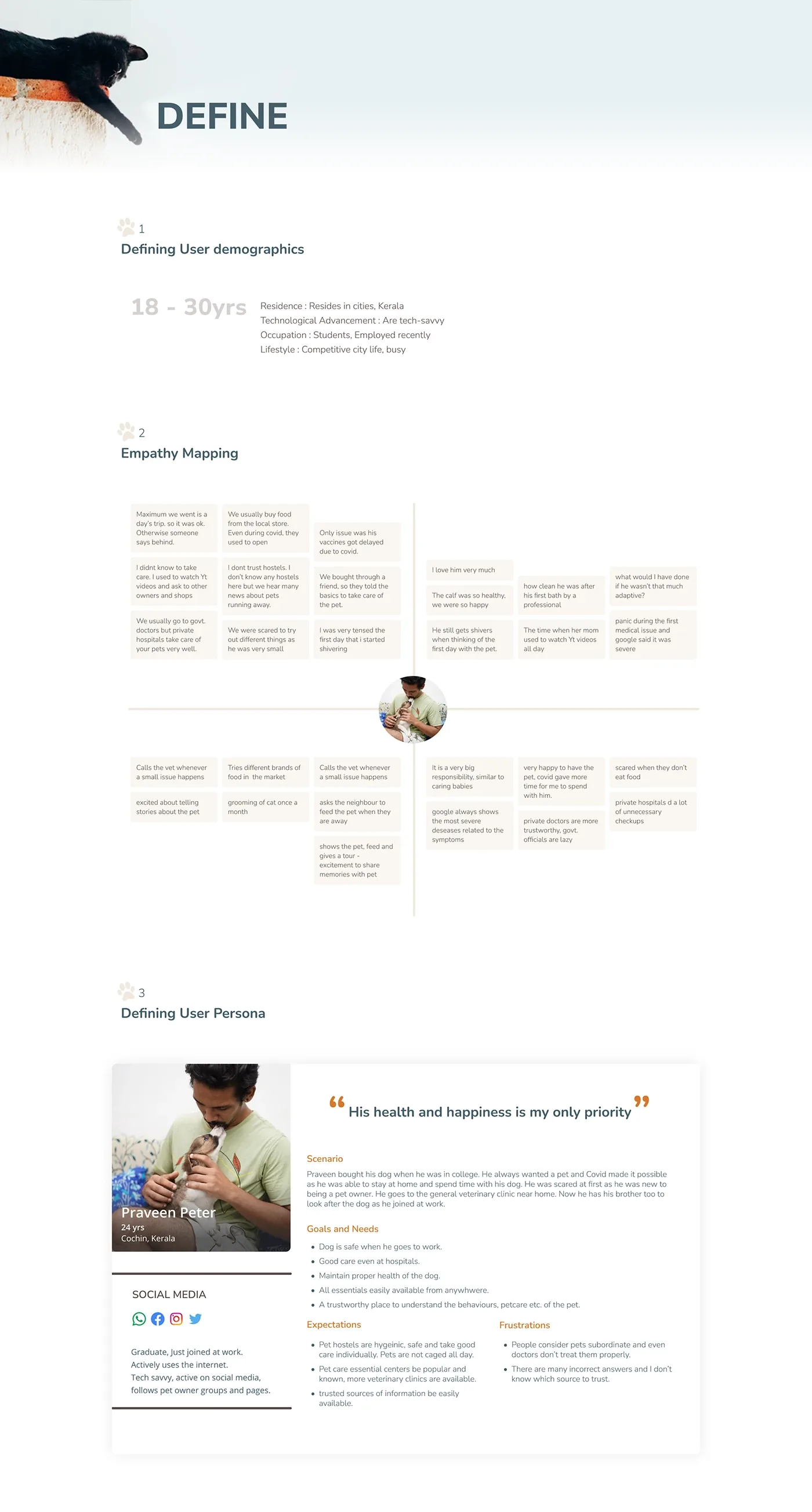
The interview and survey board records the study findings. The empathy and persona work translates those findings into a direction for novice owners.
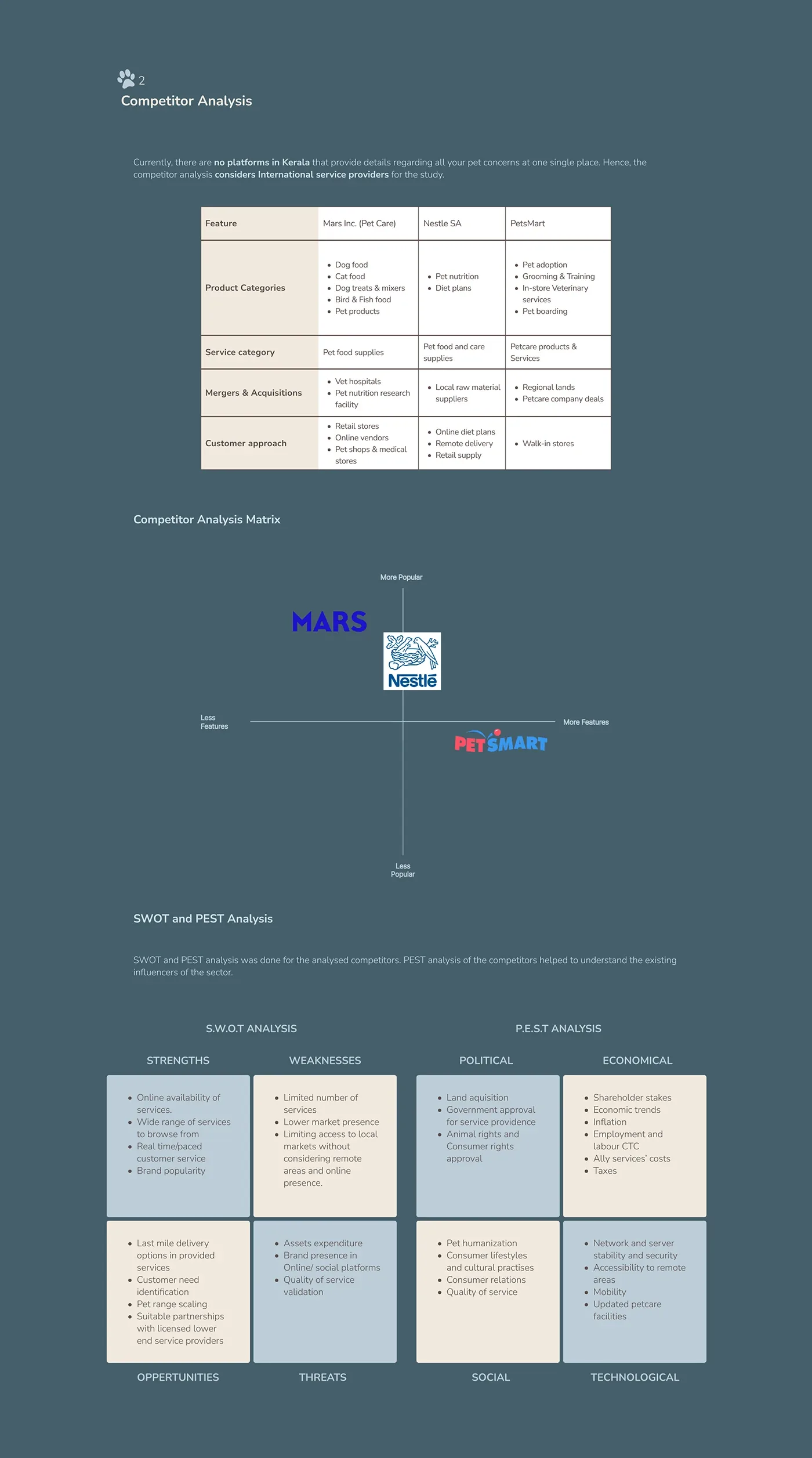
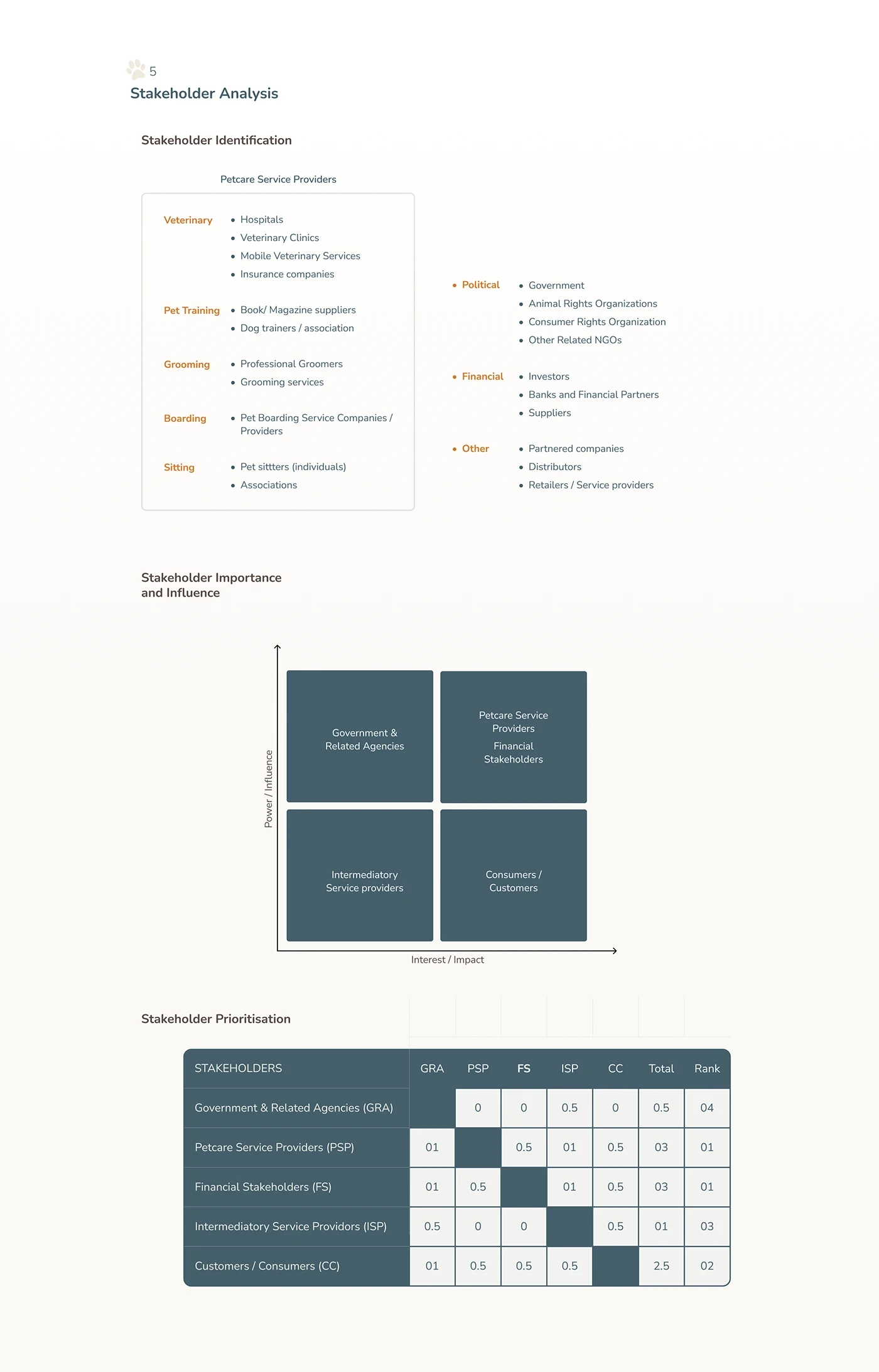
Explore the market comparison and stakeholders
Competitor analysis and stakeholder prioritisation broaden the service context around the owner research.
Design direction
Support the choice before adding more services.
Move from possibilities to a product structure
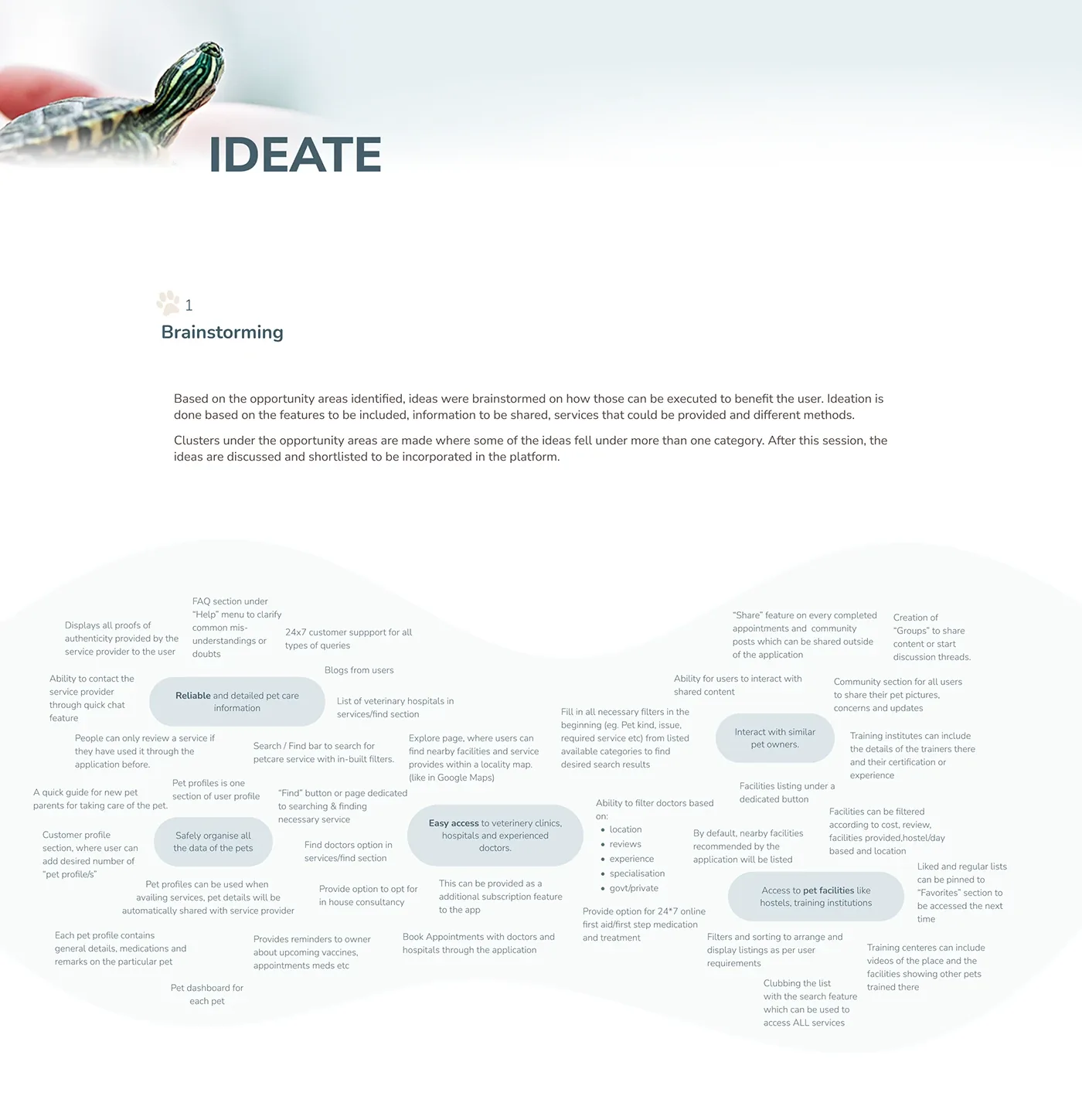
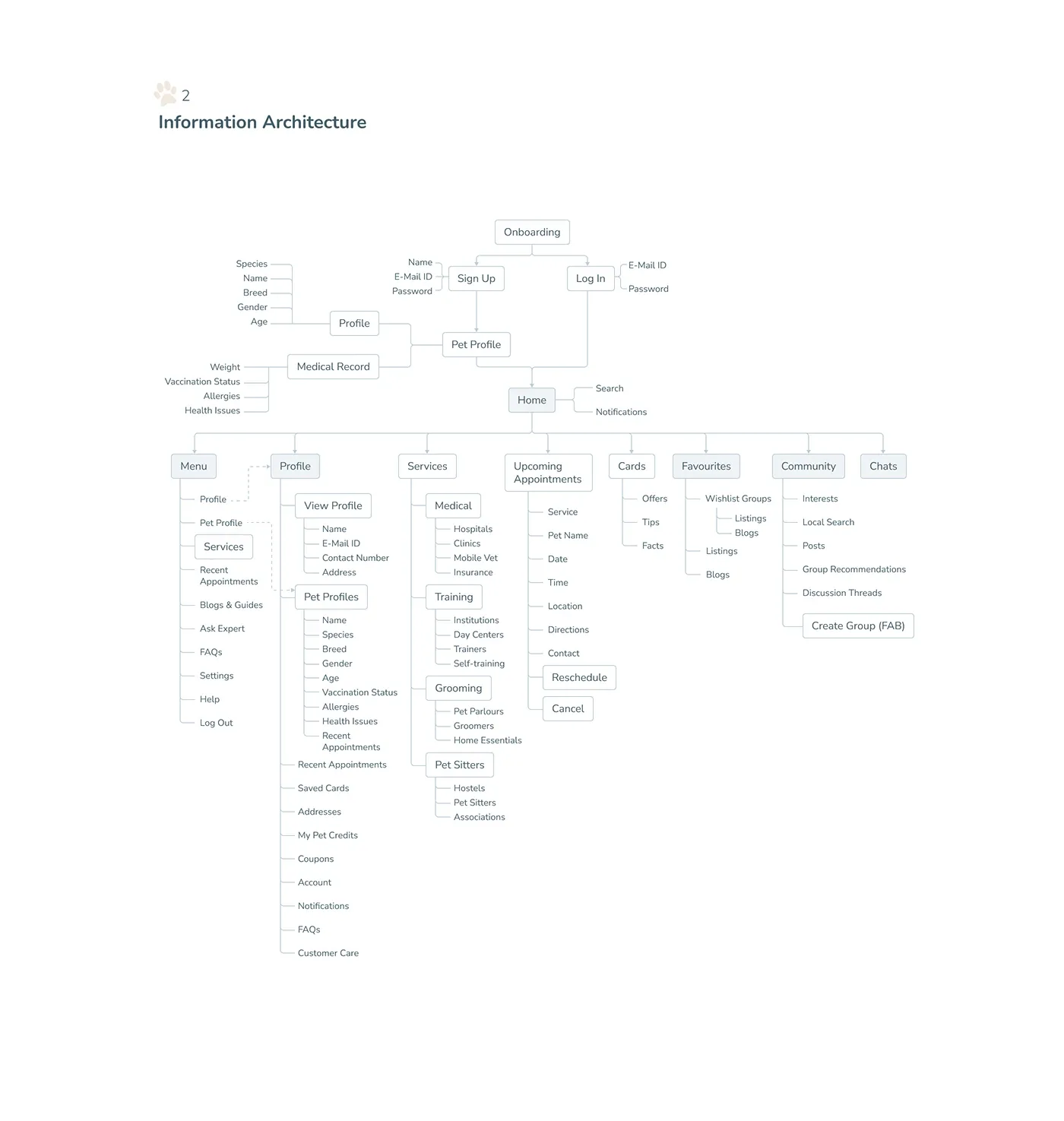
Brainstorming keeps the early possibilities visible. The information architecture then shows how services and care information were organised.
Show information that helps owners compare.
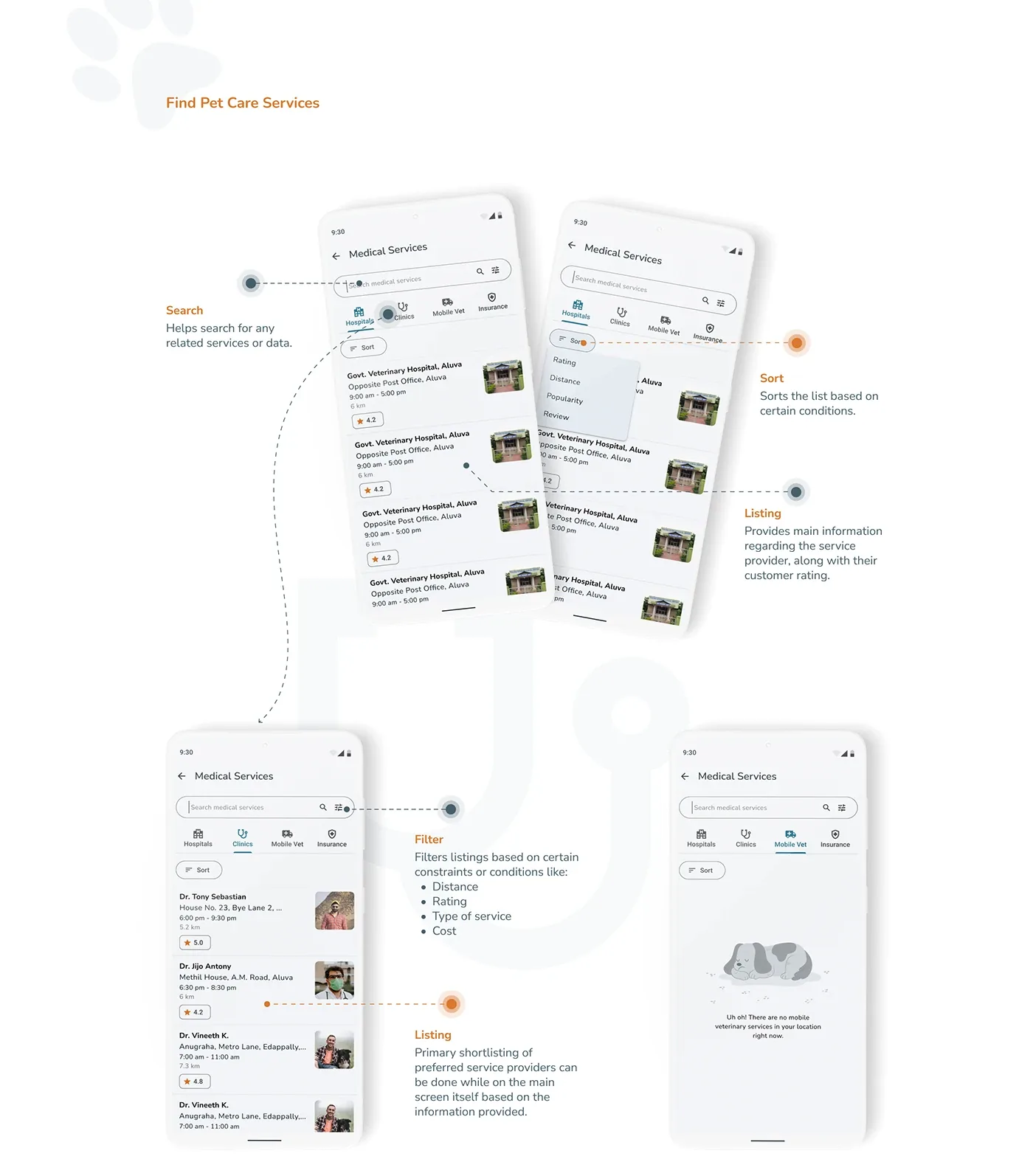
The service listings show provider information, distance, opening hours, and ratings. Search, sorting, and filters help narrow the choices by criteria such as distance and service type.
These features make available services easier to inspect. The final listing screens make provider ratings, location, hours, and service details visible for comparison. Provider authenticity documents and restricting reviews to completed bookings were explored during brainstorming, but those verification mechanisms remained ideas rather than complete designed flows.
Keep the appointment’s next actions together.
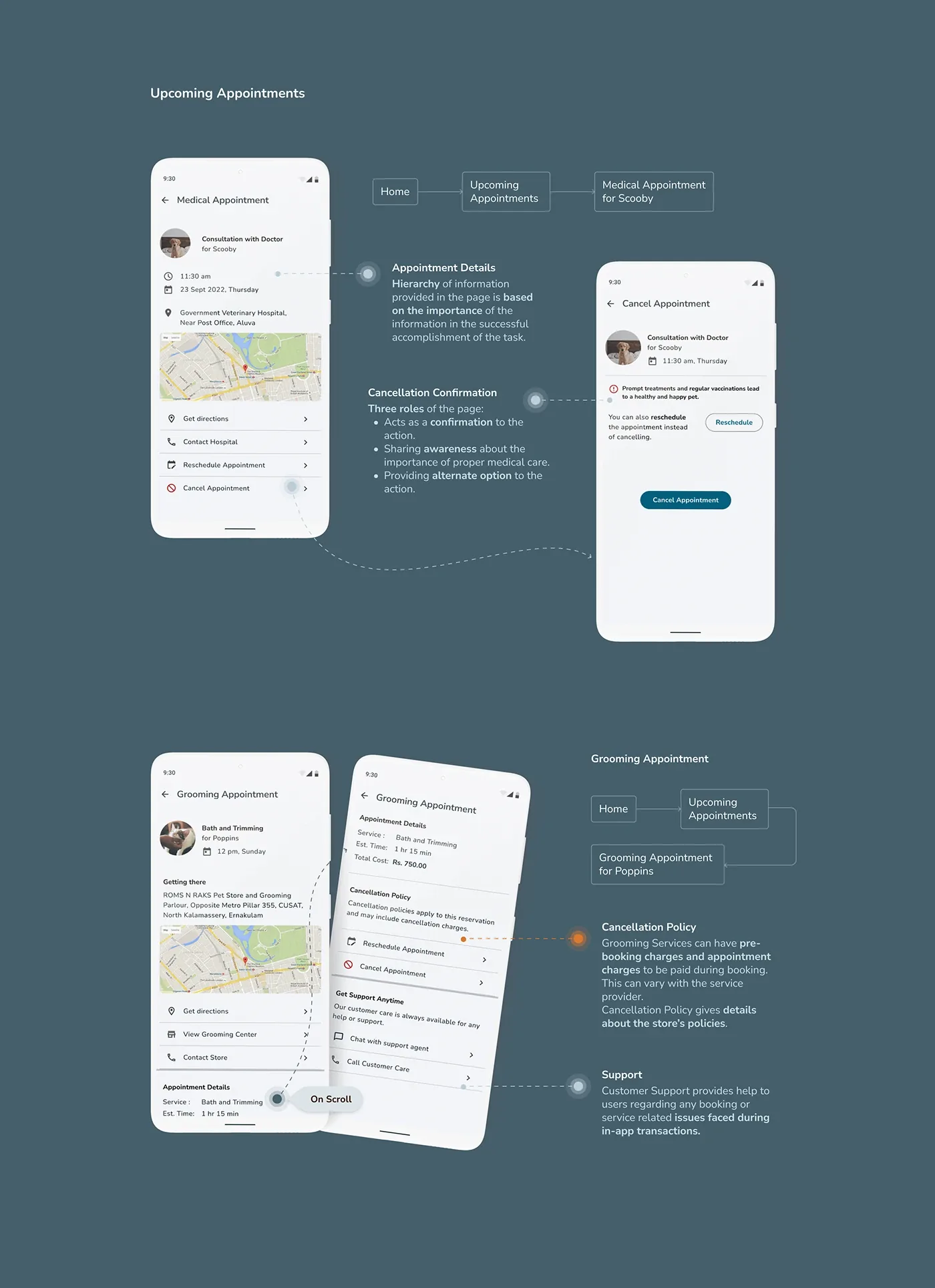
Appointment detail brings the time, directions, provider contact, and rescheduling into one place. The cancellation flow also offers rescheduling as an alternative.
The design connects a booking to what the owner needs to do next. Directions, contact, and rescheduling support the practical questions that follow a booking, while cancellation remains available when plans change.
Separate each pet’s ongoing record.
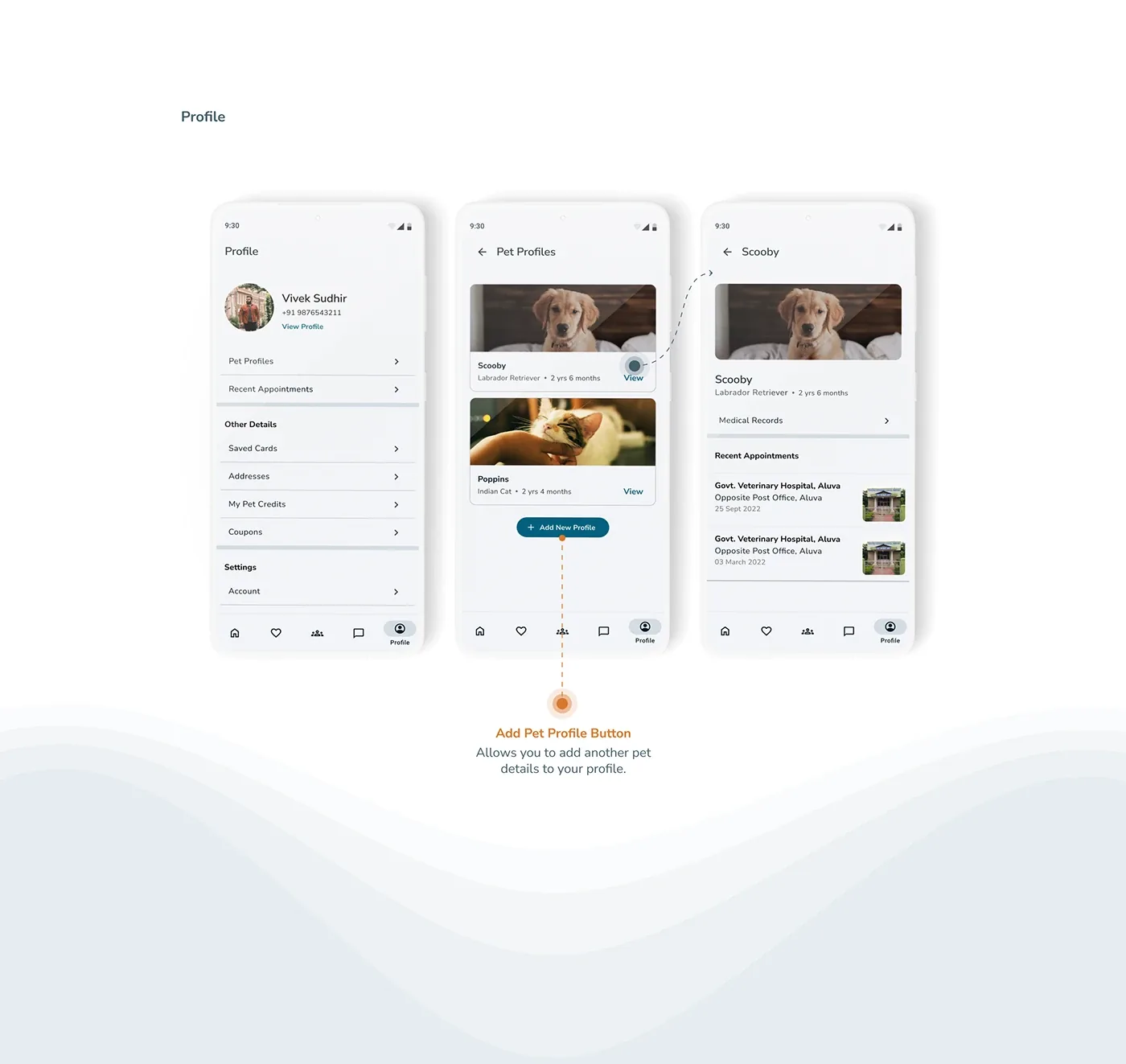
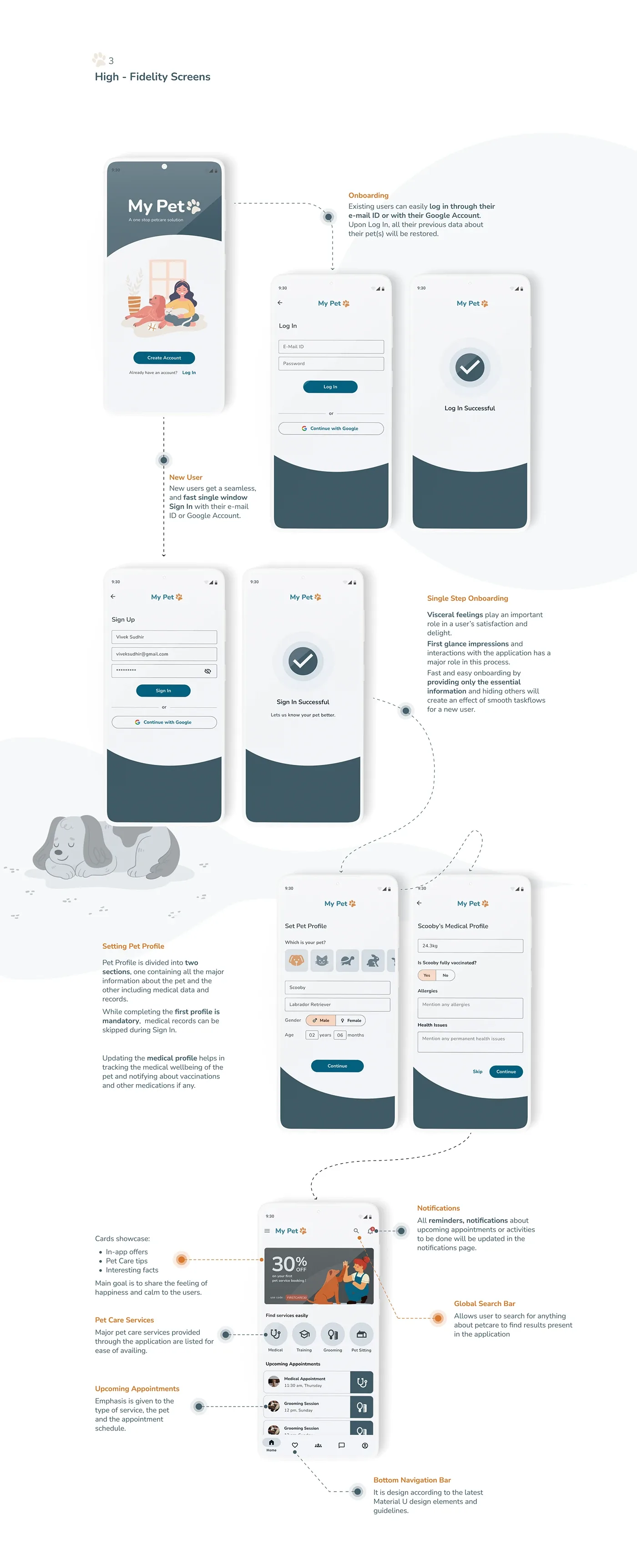
Pet profiles collect details for individual animals, including medical information and appointment history. During setup, the basic profile is required while the medical record can be completed later.
This separates getting started from entering a fuller care history. Whether the entry burden and later reminders work for new owners remains a question for testing.
Explore the visual system
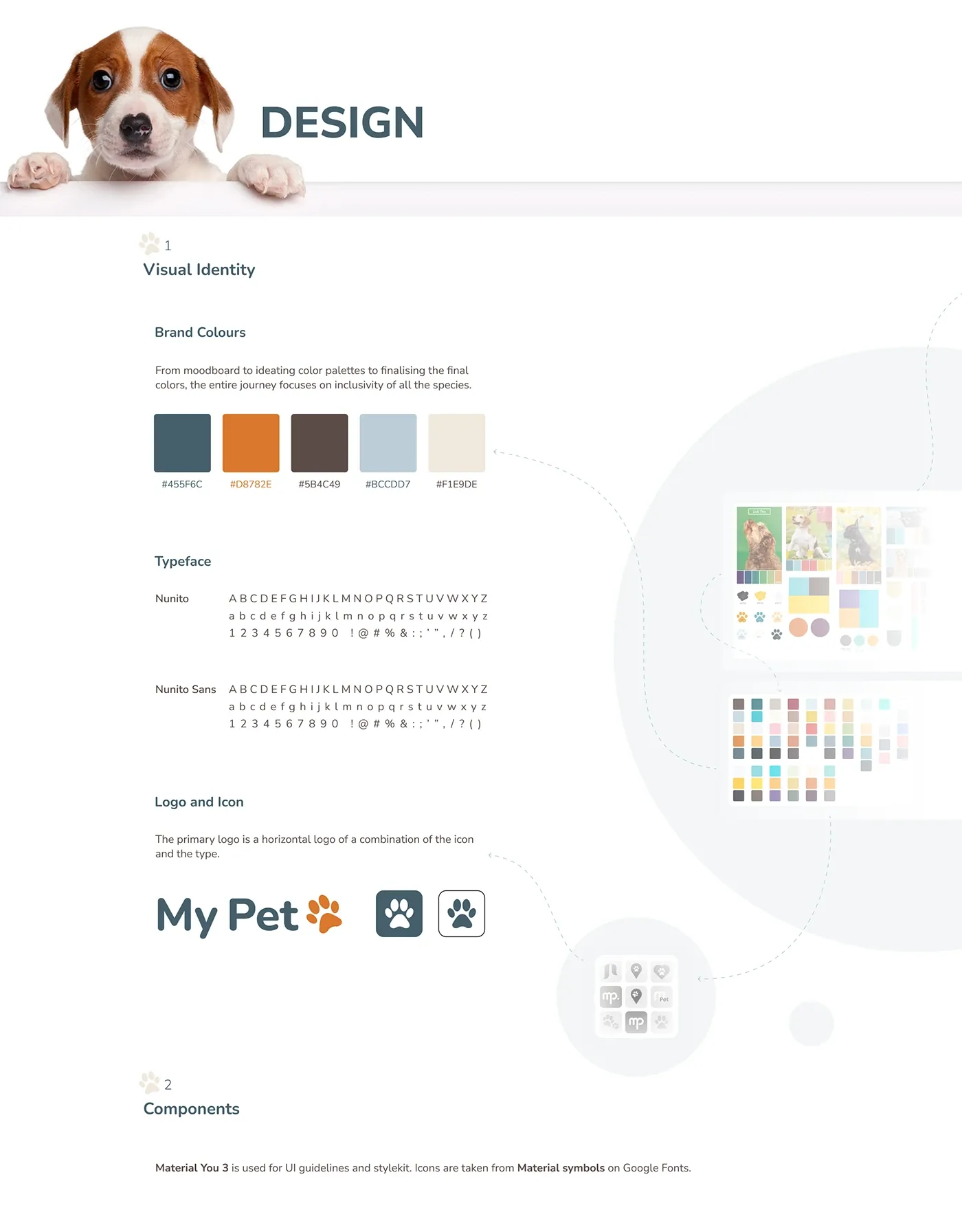
Colour, typography, icons, and branding support the interface choices shown below.
Finding care
From looking for care to managing the visit.
Enter the experience with a pet profile
Setup and the home screen establish the owner and pet context for discovering care and managing a visit.
Discover a local service.
The owner selects the relevant type of care, then searches or filters the listings. Distance, hours, and other provider information support an initial shortlist.
The concept also includes an empty state when a service is unavailable locally. This is an important part of the journey, because a broad service catalogue cannot guarantee local availability.
Prepare for the appointment.
The appointment page brings together the relevant pet, service, time, provider location, and contact options. That gives the owner one place to return to before the visit.
Change plans when needed.
Rescheduling and cancellation remain available from the appointment. Policy information and support are included in the grooming example.
The surrounding flow still needs evaluation. The screens show the intended experience, rather than evidence that owners can complete it successfully.
Explore the wider service concepts
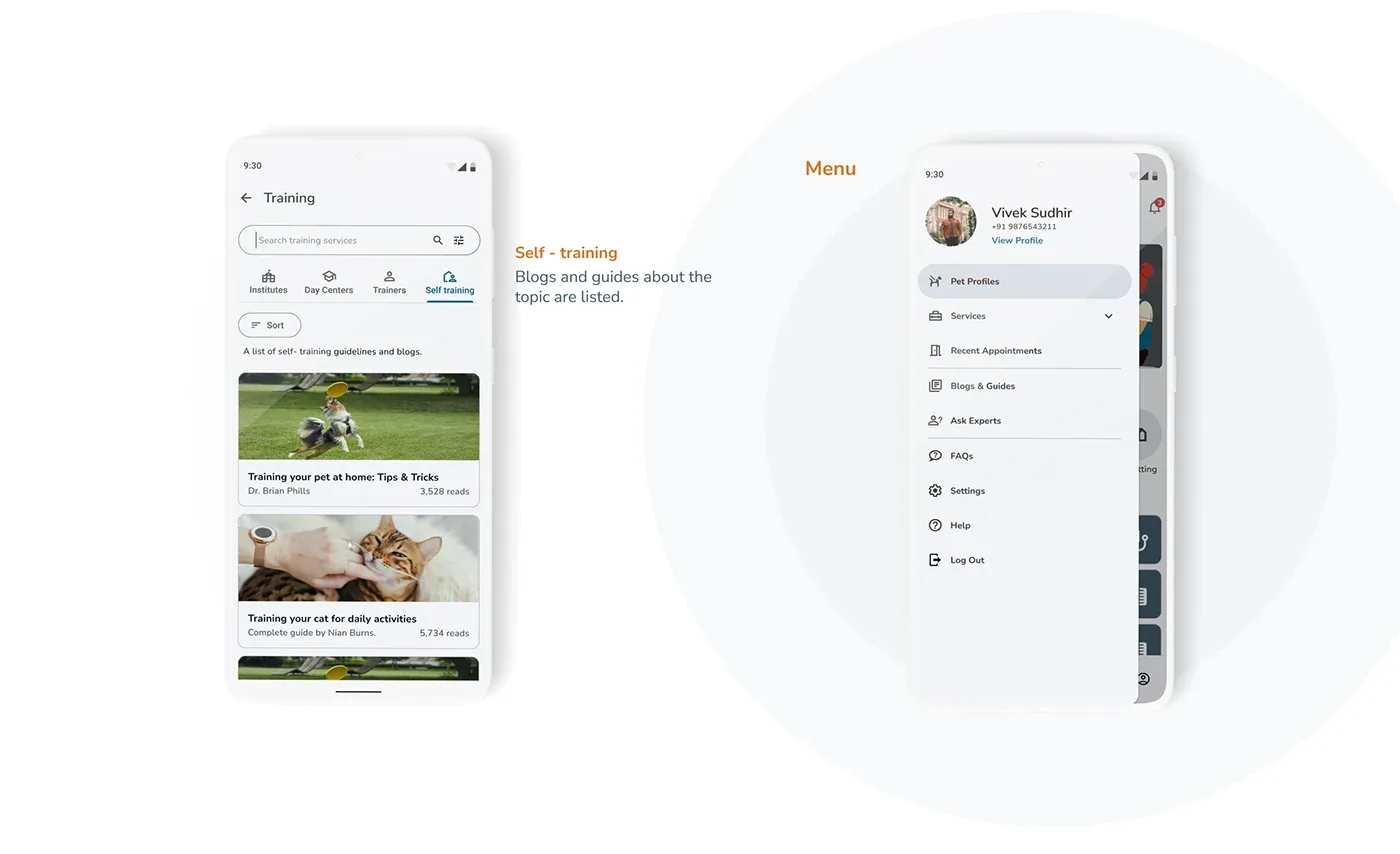
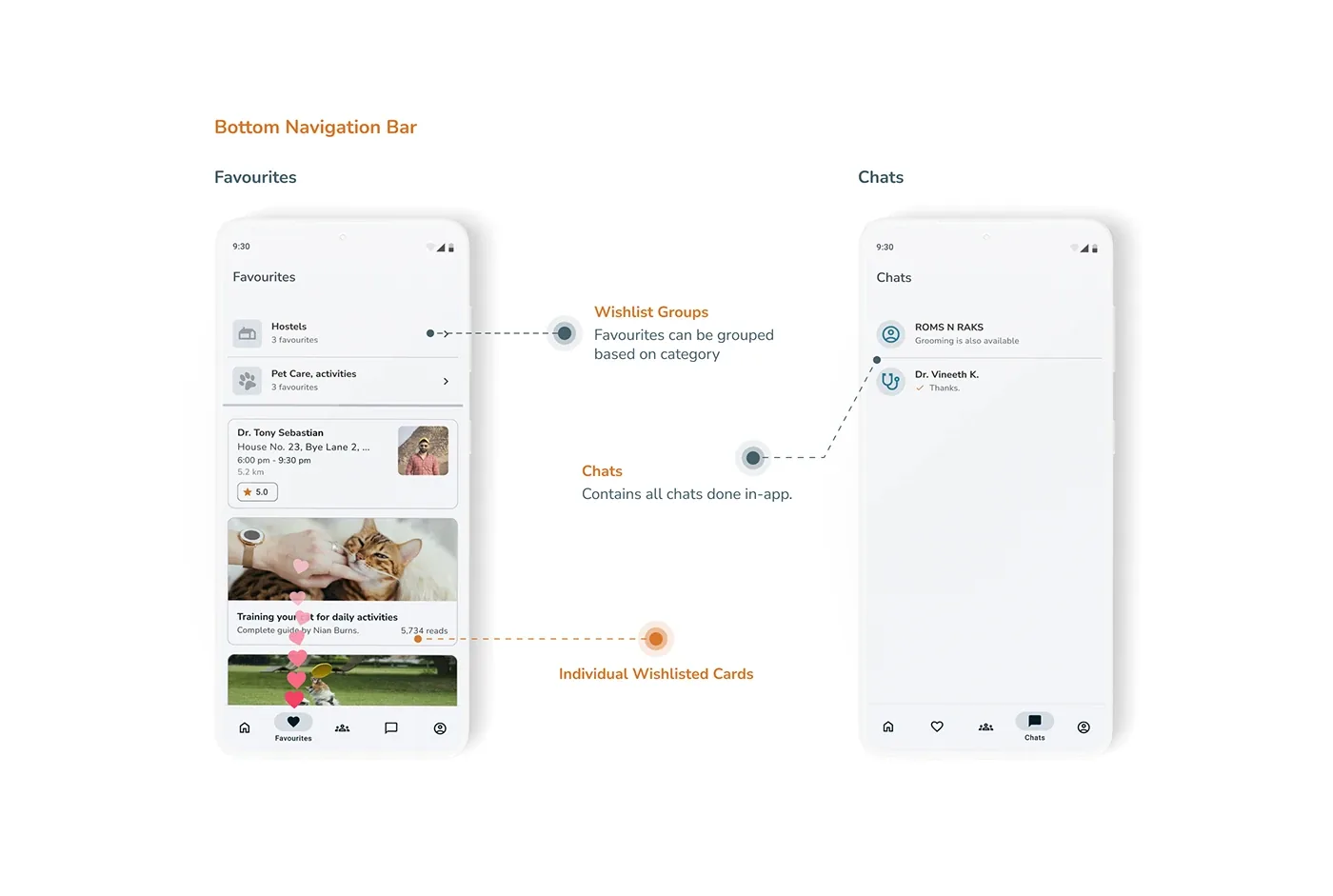
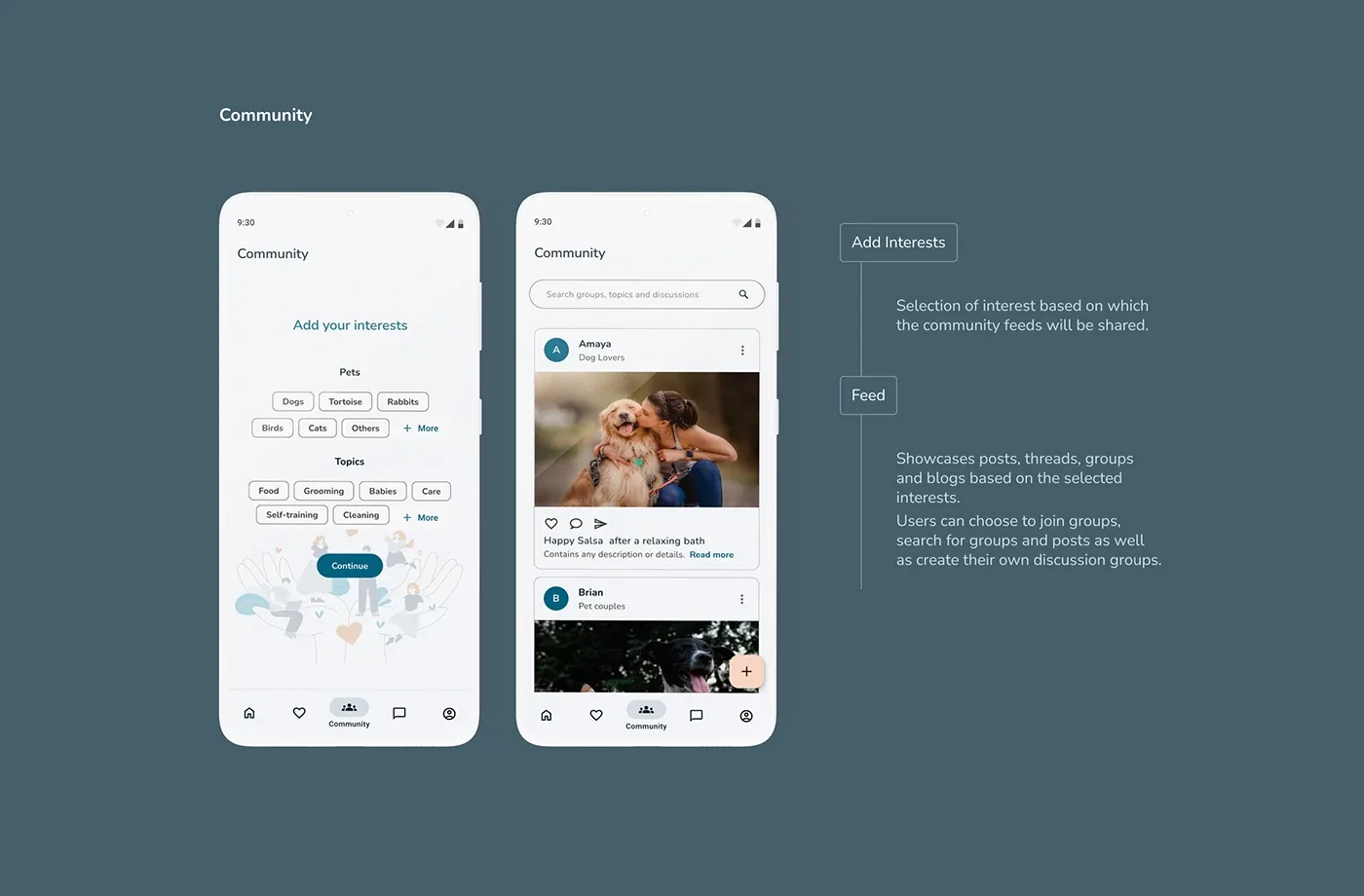
Training, saved services, conversations, and community remain accessible beside the core care journey.
Concept outcome
A concept for finding and organising pet care.
The three-month project produced research synthesis, an application structure, a visual system, and high-fidelity screens. The broader concept includes training content, favourites, conversations, and community, alongside service discovery and appointments.
No usability testing was carried out. The final concept shows provider comparison, contact options, appointment policies and support, and care records. Authenticity-proof display and reviews restricted to completed bookings remain ideation proposals rather than demonstrated final flows. Future reminders and a connected source of reliable care information remain opportunities for development.
What I learned
Confidence needs more than a large catalogue.
The research points toward a service that helps an owner make a dependable choice. Additional features should support that task, and the trust mechanisms need to be evaluated explicitly.
A next study could ask novice owners to shortlist a provider, explain what gives them confidence, and find how to change an appointment. That would help establish what information matters before expanding into more services and community features.