Semester thesis · 2022
A glucose reading and the routine around it.
- ROLE
- UX & Industrial Designer
- TEAM
- Solo project
- DURATION
- 6 months · 2022
For my semester thesis, I explored how a connected device and companion app could support everyday glucose monitoring, from preparing the tools to keeping a useful record.
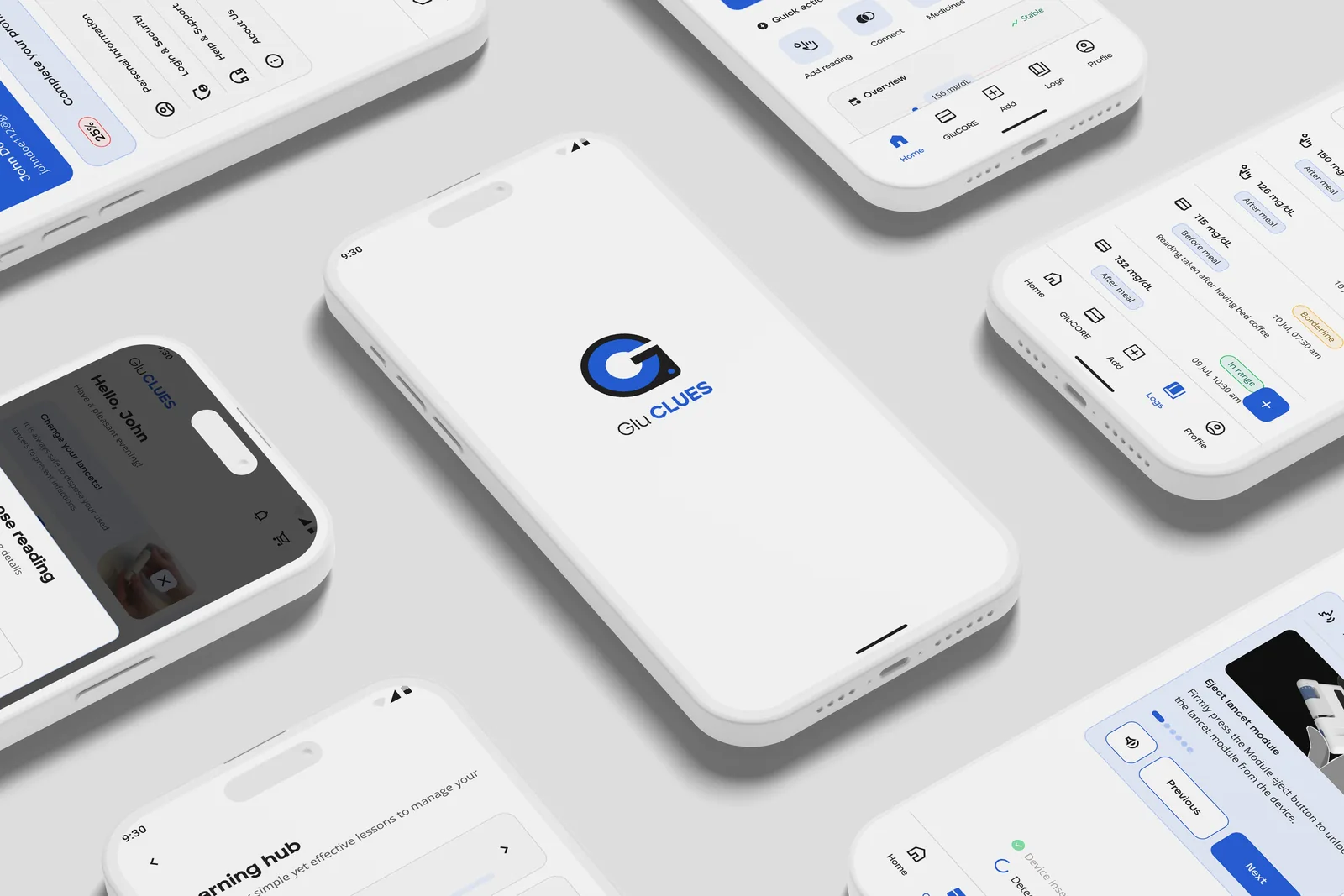
Monitoring routine
Taking a reading was only part of the routine.
Helping a relative begin monitoring after a Type 2 diabetes diagnosis showed me how difficult it could be to use the device and understand the habits around a new routine. That experience shaped my sixth-semester thesis.
I narrowed the brief to self-monitoring blood glucose in the Indian context. The project explored both the physical measurement process and what happens to a reading afterwards. GluCORE is the device concept; GluCLUES is its companion app.
Research findings
The routine crossed physical tools and information.
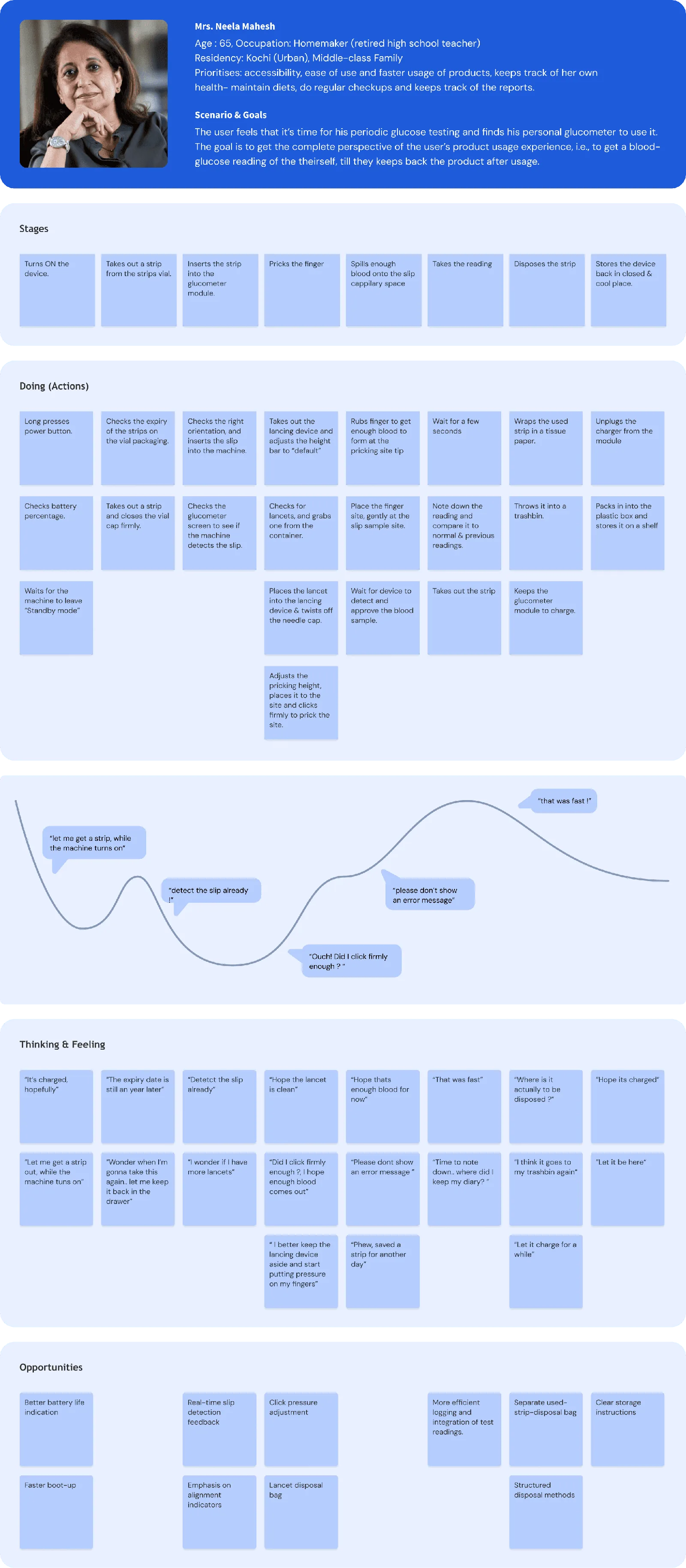
The device phase examined existing glucometers, market conditions, and users’ measurement journeys. A survey of measurement experiences informed the work. The journey map follows a 65-year-old retired teacher and homemaker in urban Kochi through preparation, taking a reading, recording it, disposal, and storage. Three themes shaped the concept: clearer feedback, uncertainty around pricking tools and disposal, and recording readings to discuss with a doctor.
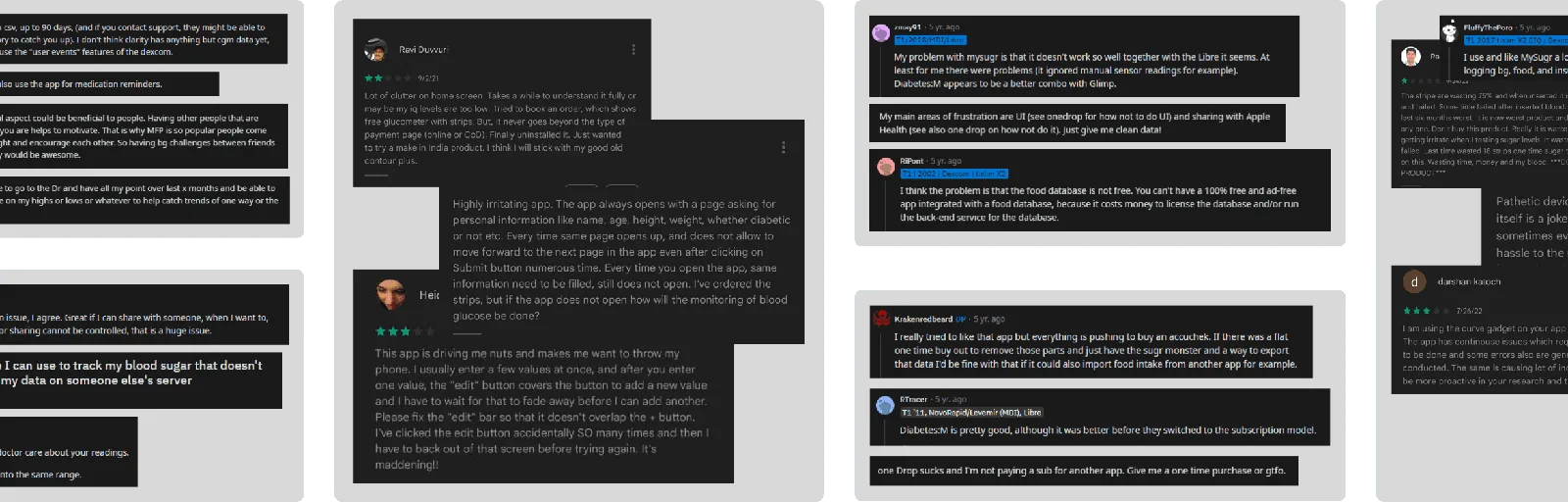
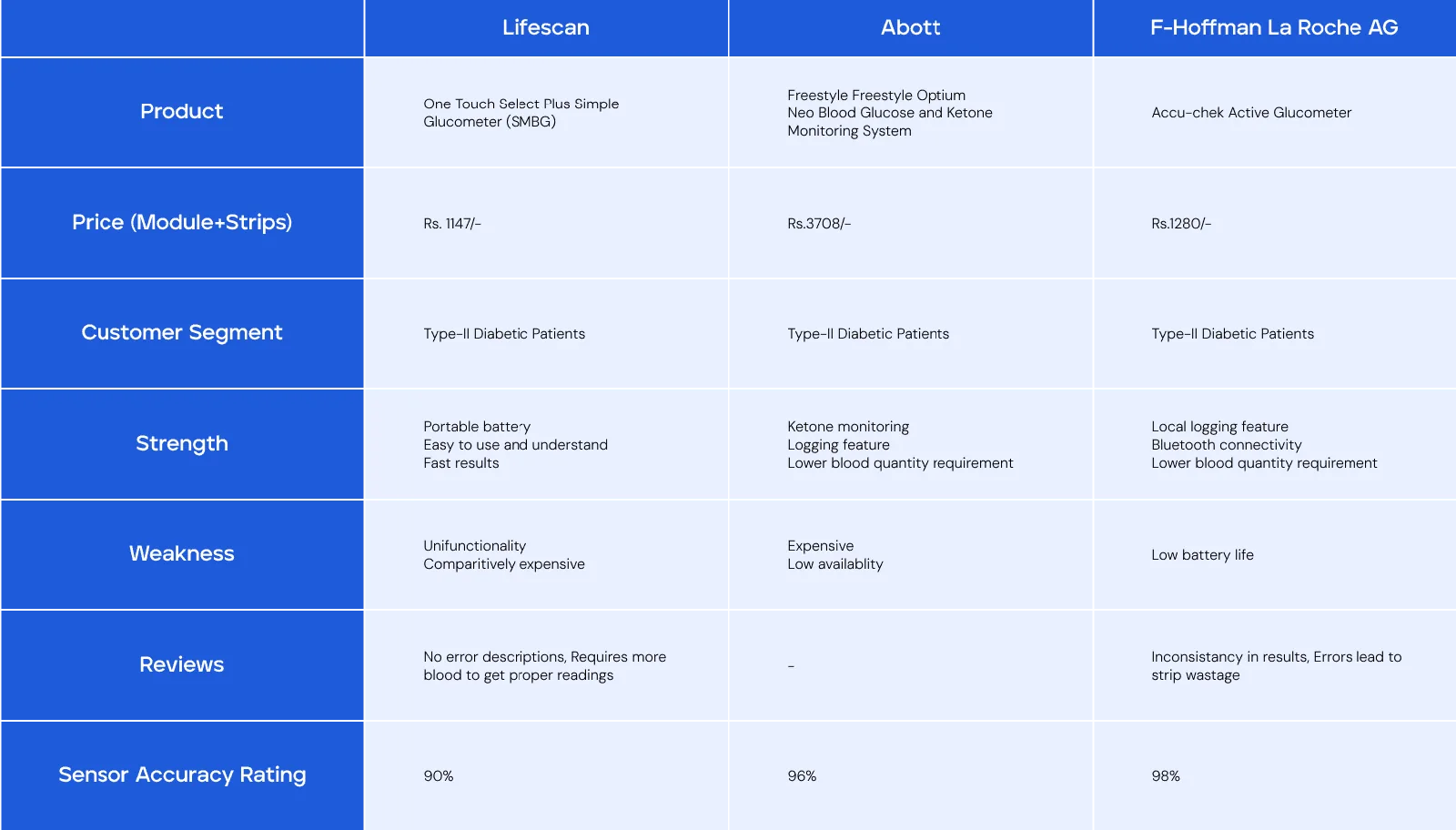
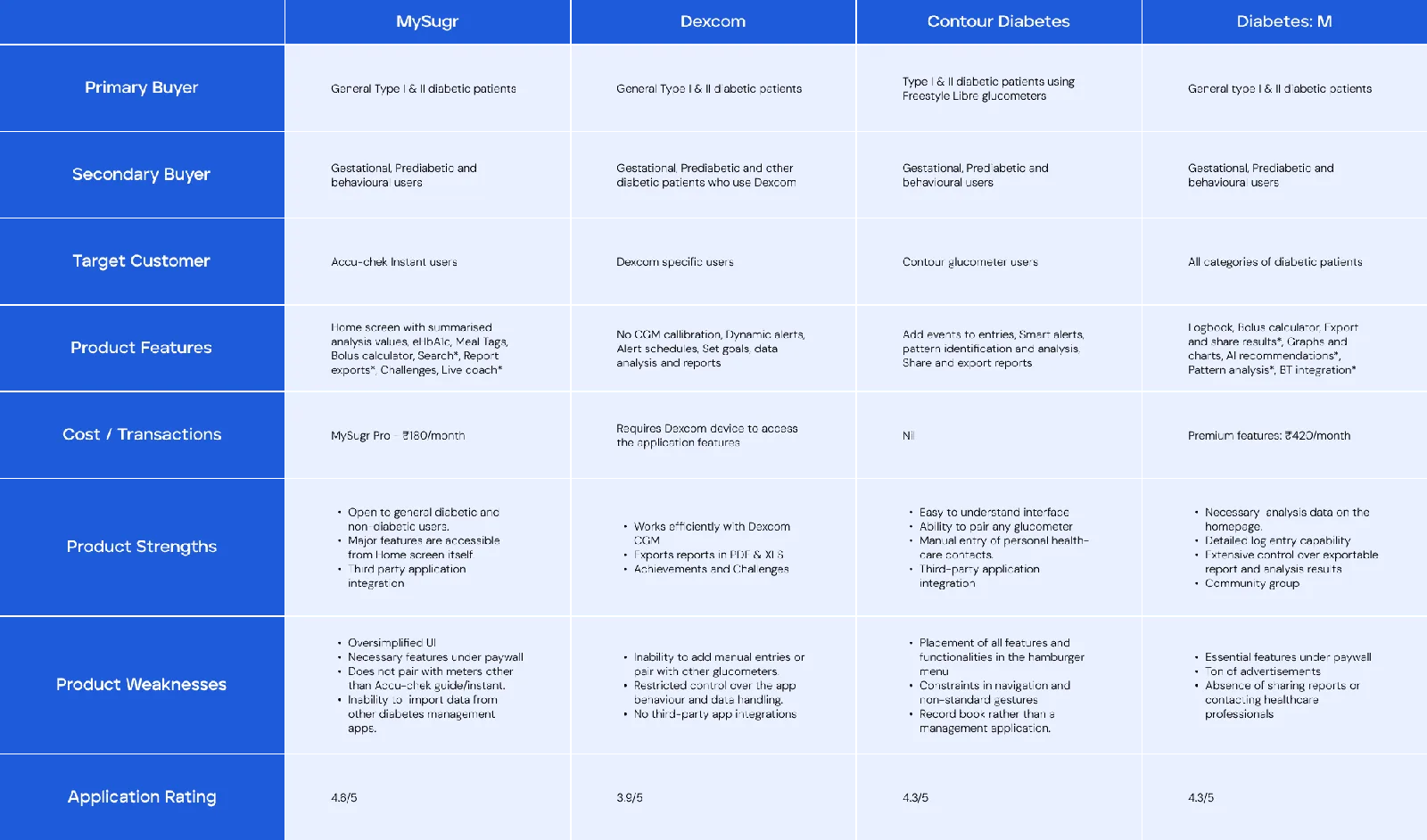
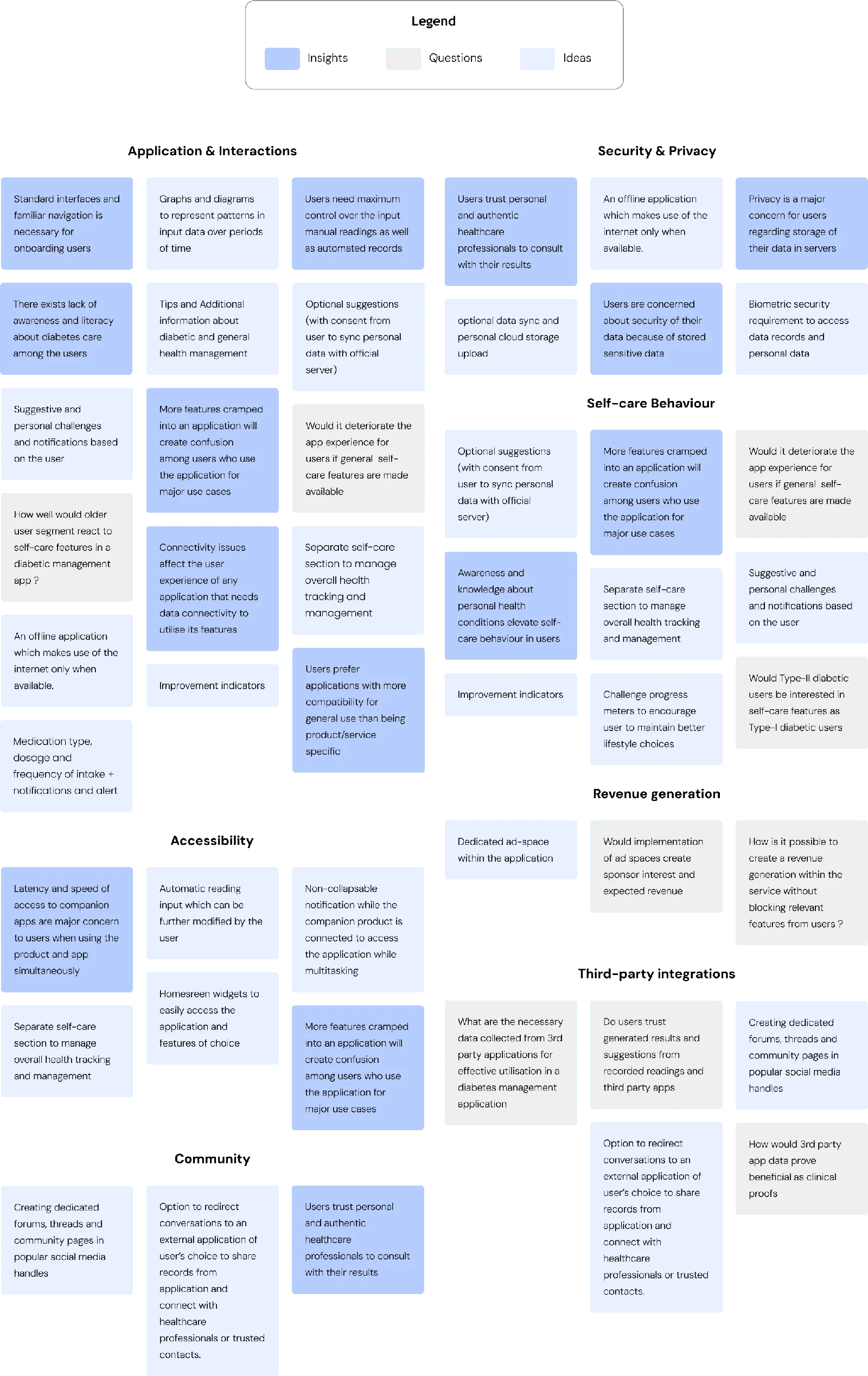
For the app phase, I compared existing products and reviewed app-store feedback, forums, and community discussions. Those sources raised concerns about data entry, clutter, connectivity, subscriptions, and control over records.
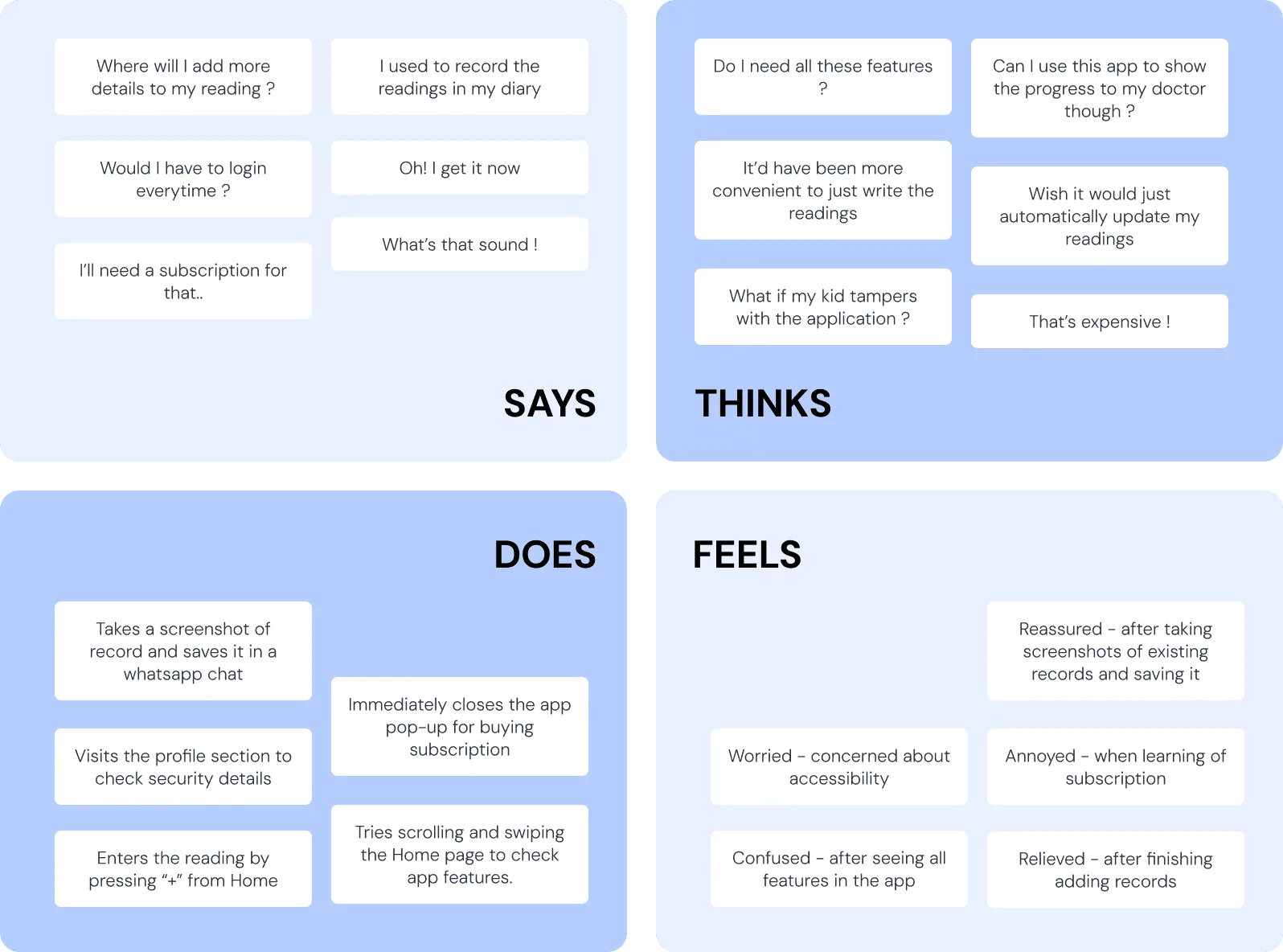
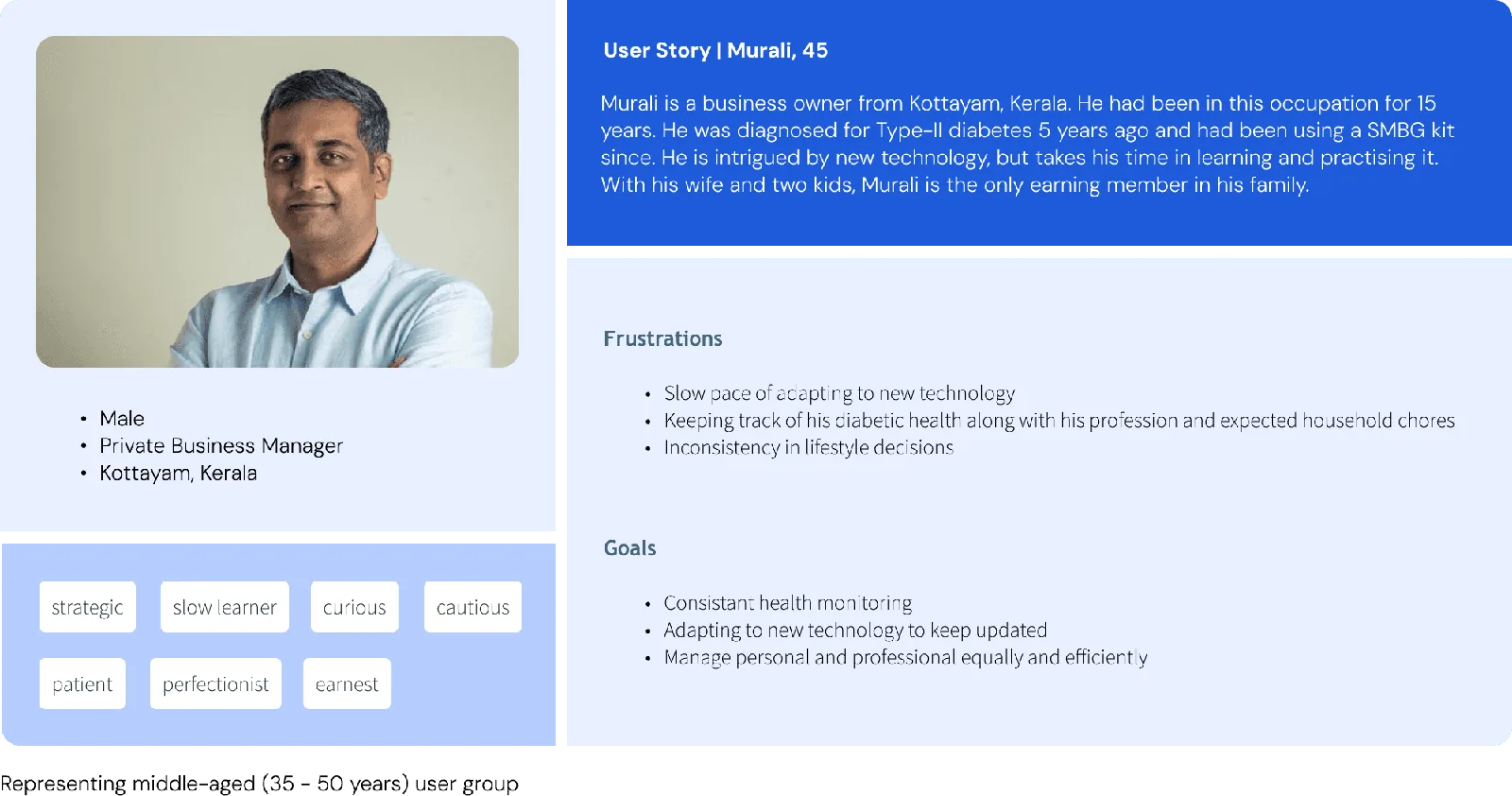
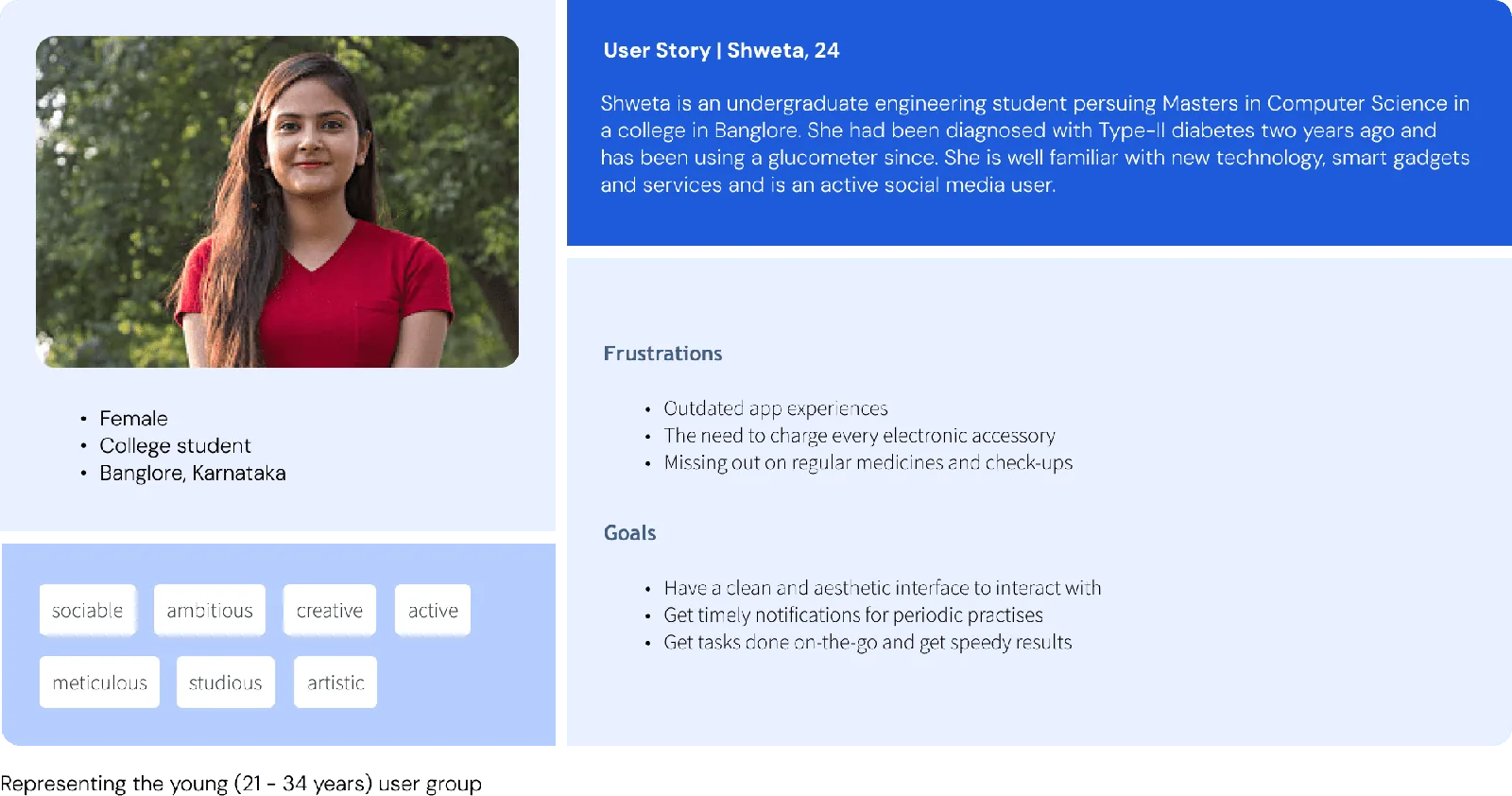
Primary app research was limited. Peer role-playing and contextual simulations supported empathy building, while desk research informed the personas. Those artifacts represent synthesis and assumptions to investigate.
Understand the measurement routine
The device study and journey map connect preparation, measurement, and recording. This routine gives the physical concept its starting point.
Look beyond the device
Reviews and community feedback broadened the study to the frustrations surrounding diabetes apps. These are secondary sources, distinct from direct observation.
Explore the research framework and benchmarks
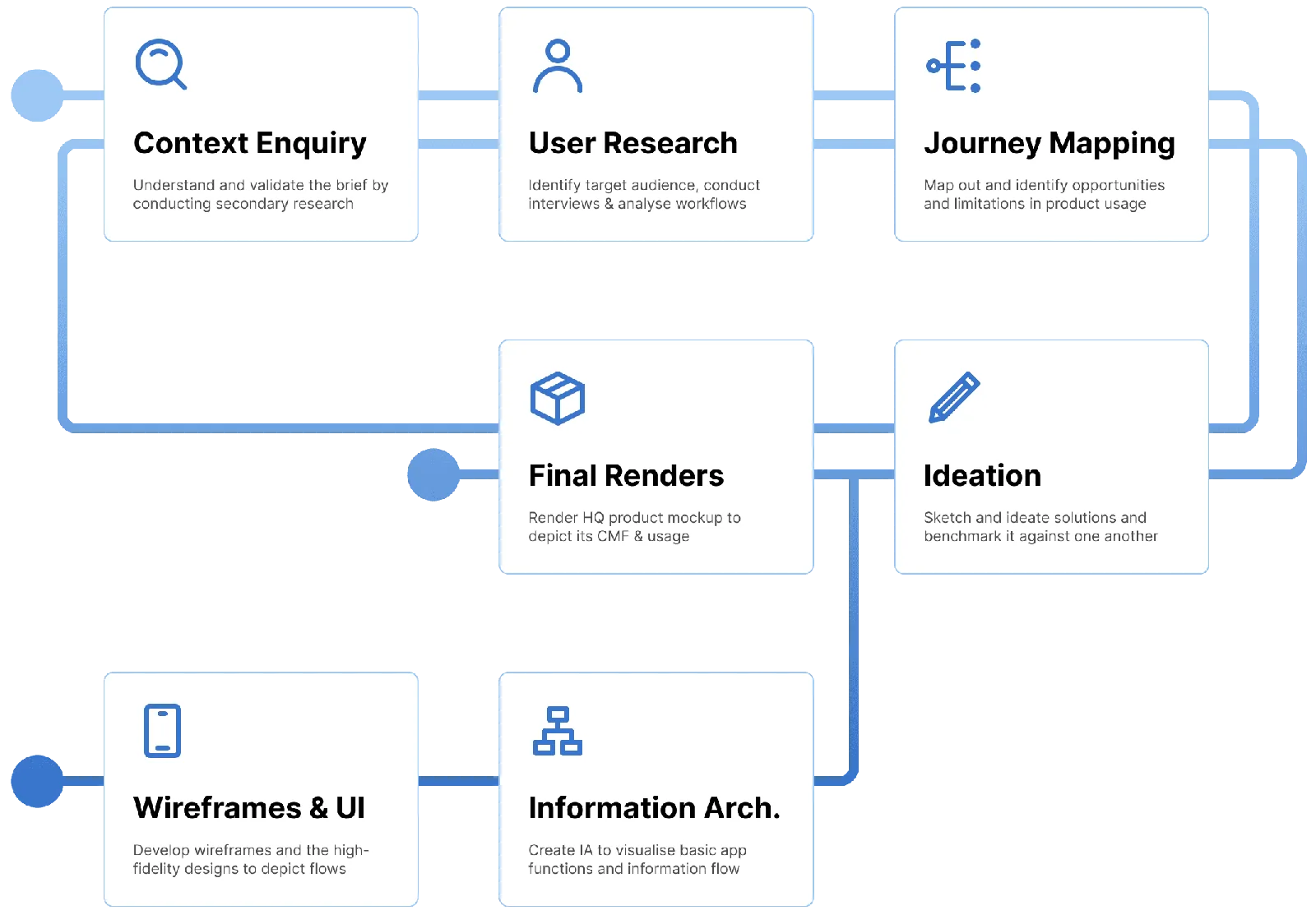
The process overview, device comparison, app benchmarking, and opportunity analysis document the research at the time of the 2022 thesis.

Explore the synthesis and provisional personas
The empathy map, personas, and affinity clusters show how the material was organised. The app personas reflect desk research and simulation, rather than validated audience segments.
Device & app
Treat the device and app as one experience.
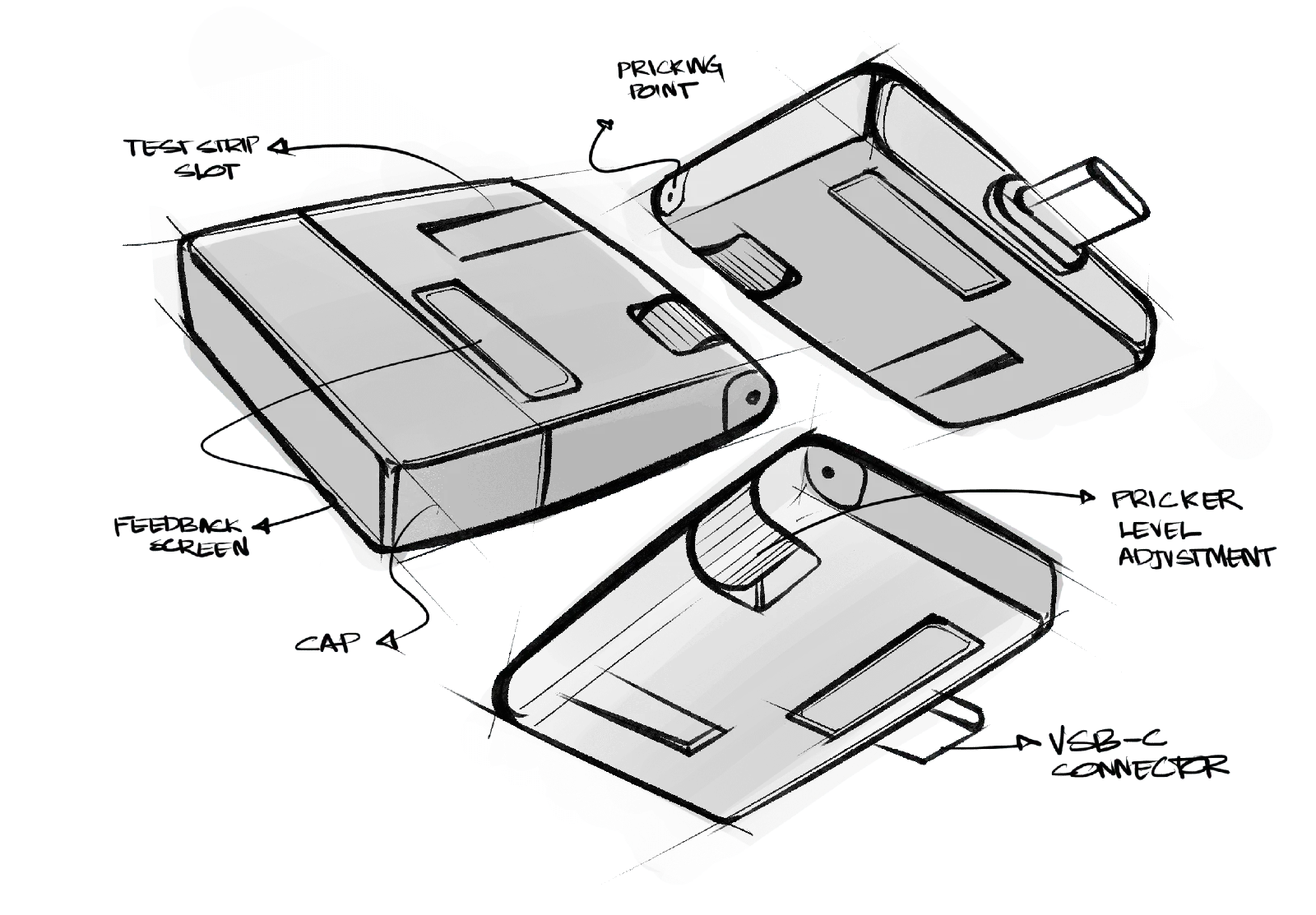
Explore the physical form before resolving it
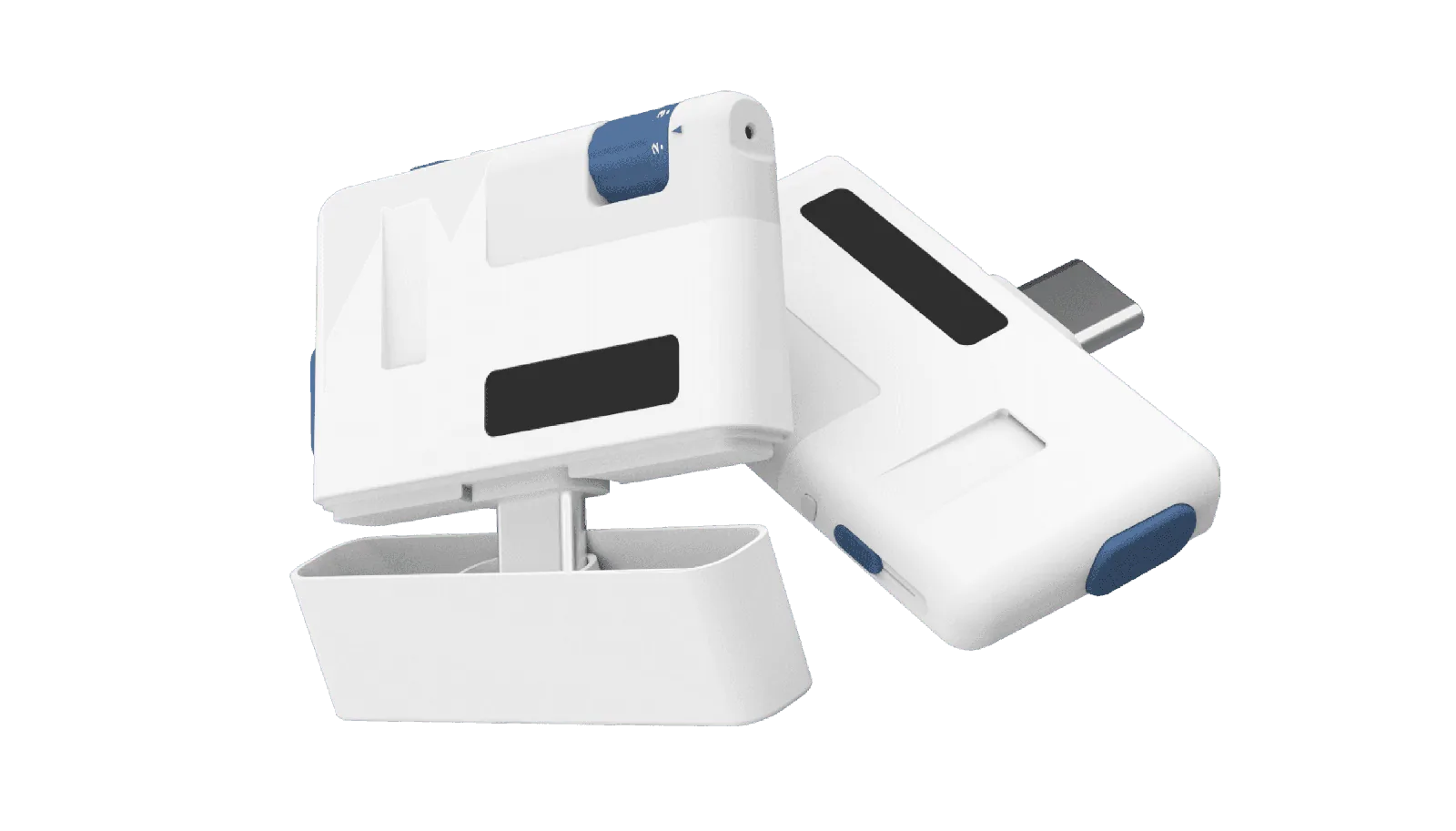
Early sketches show the product exploration behind the compact, phone-connected device. The render shows the resulting form.
Turn research into a proposed structure
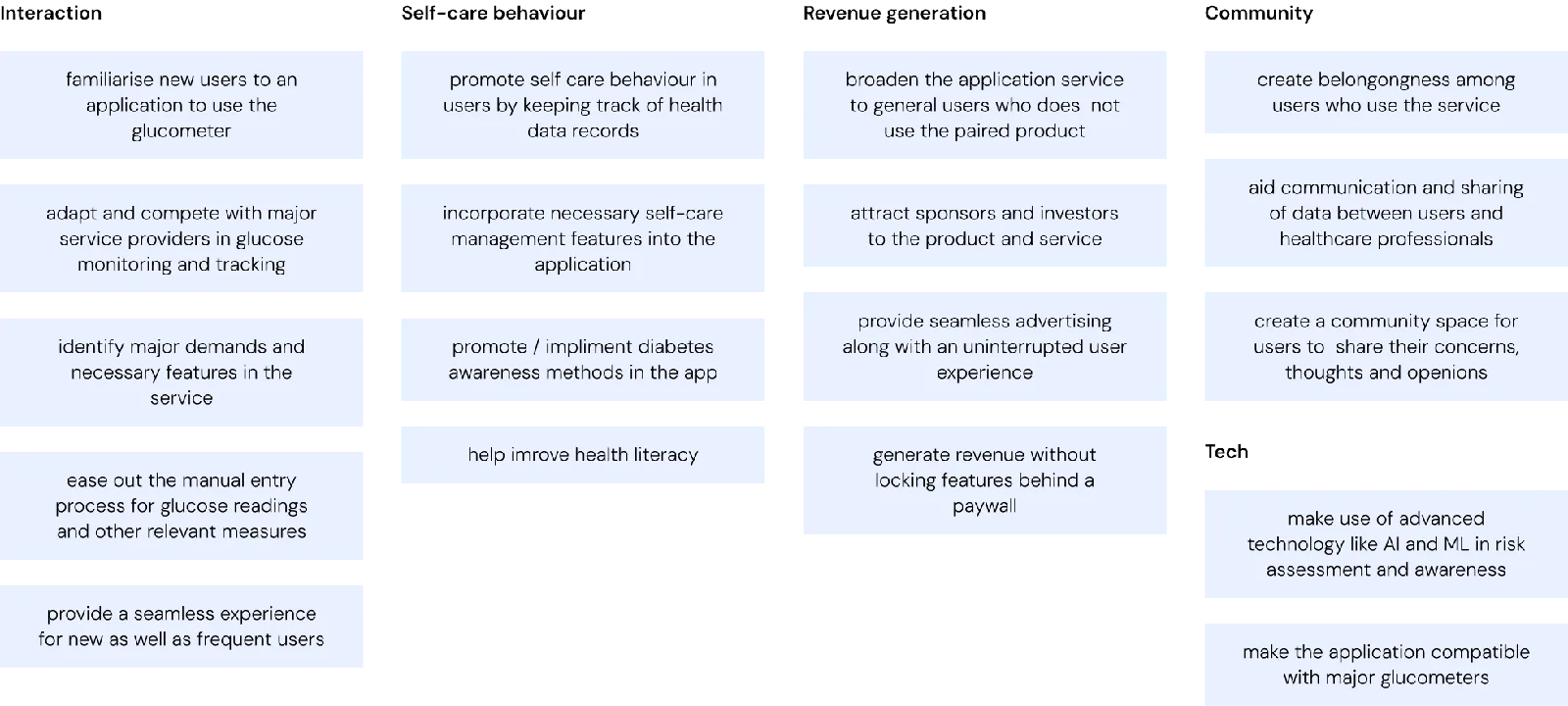
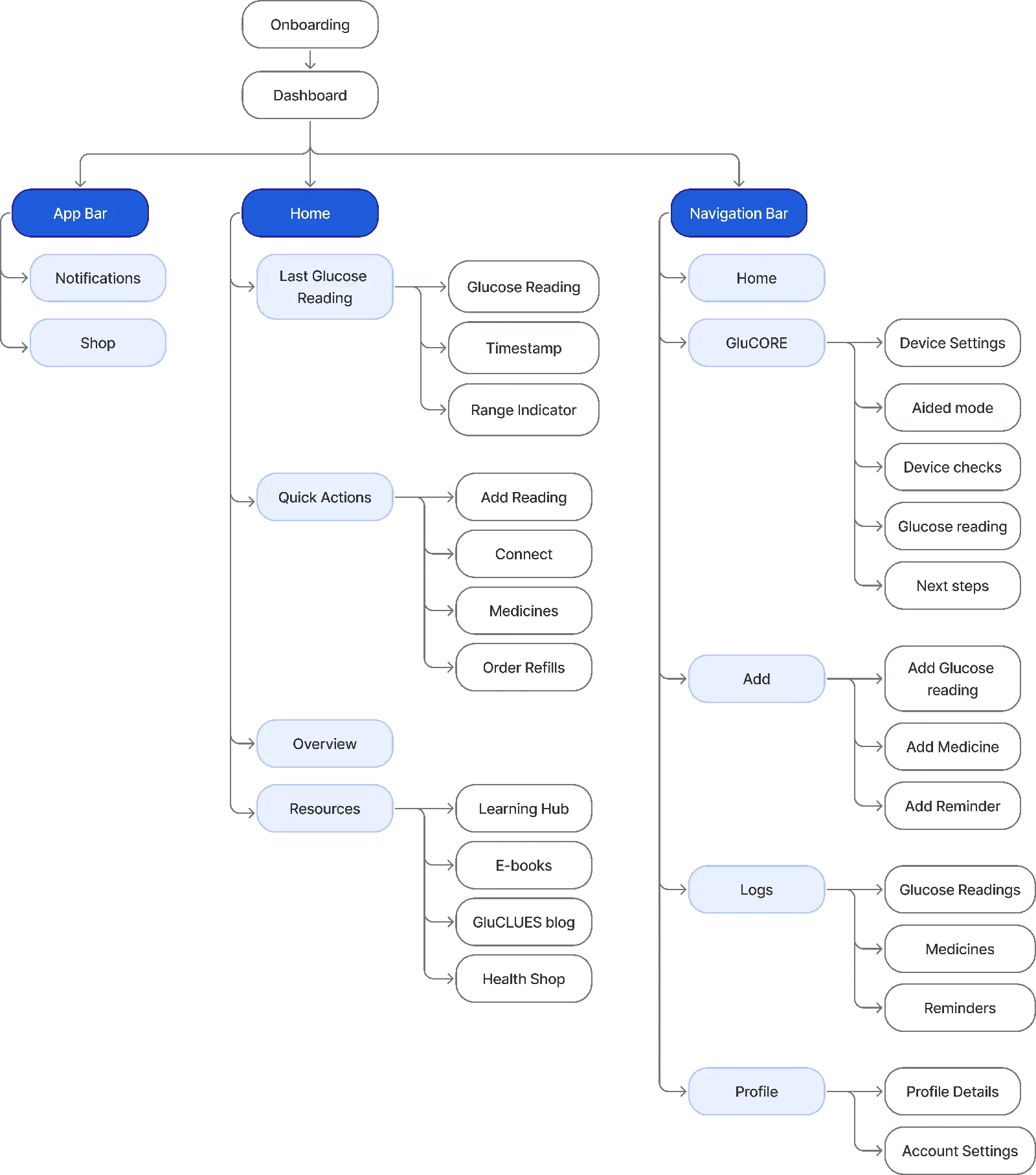
The opportunity questions and application architecture bridge the research and the interface choices that follow.
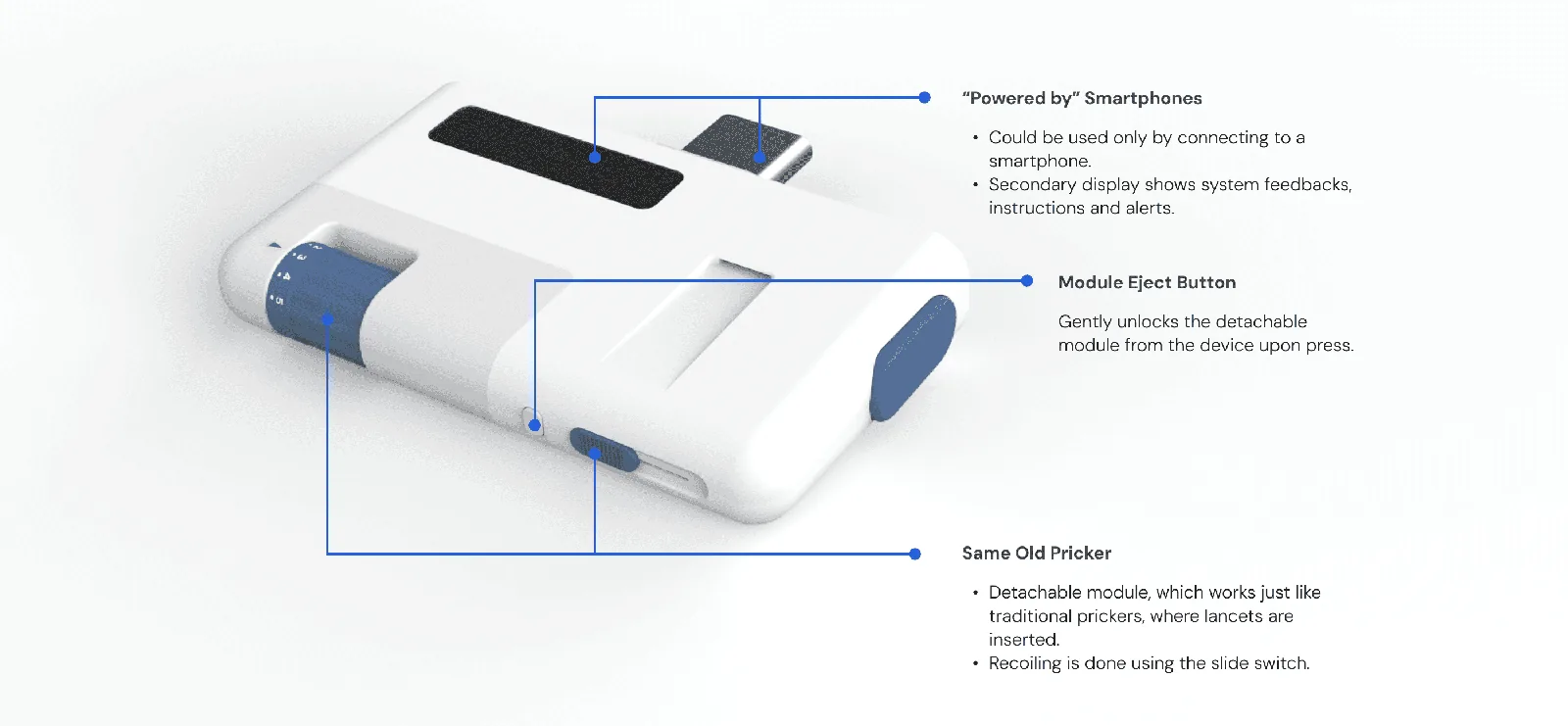
Use the phone to support the measurement.
GluCORE connects to a smartphone and uses its display to give a reading more space and context. The concept combines the glucometer with an integrated pricker and a detachable module.
The intended benefit is a more compact set of tools. The tradeoff is dependence on a compatible phone and the companion app during use. That dependency makes connection feedback part of the core experience.
Keep guidance close to the physical action.
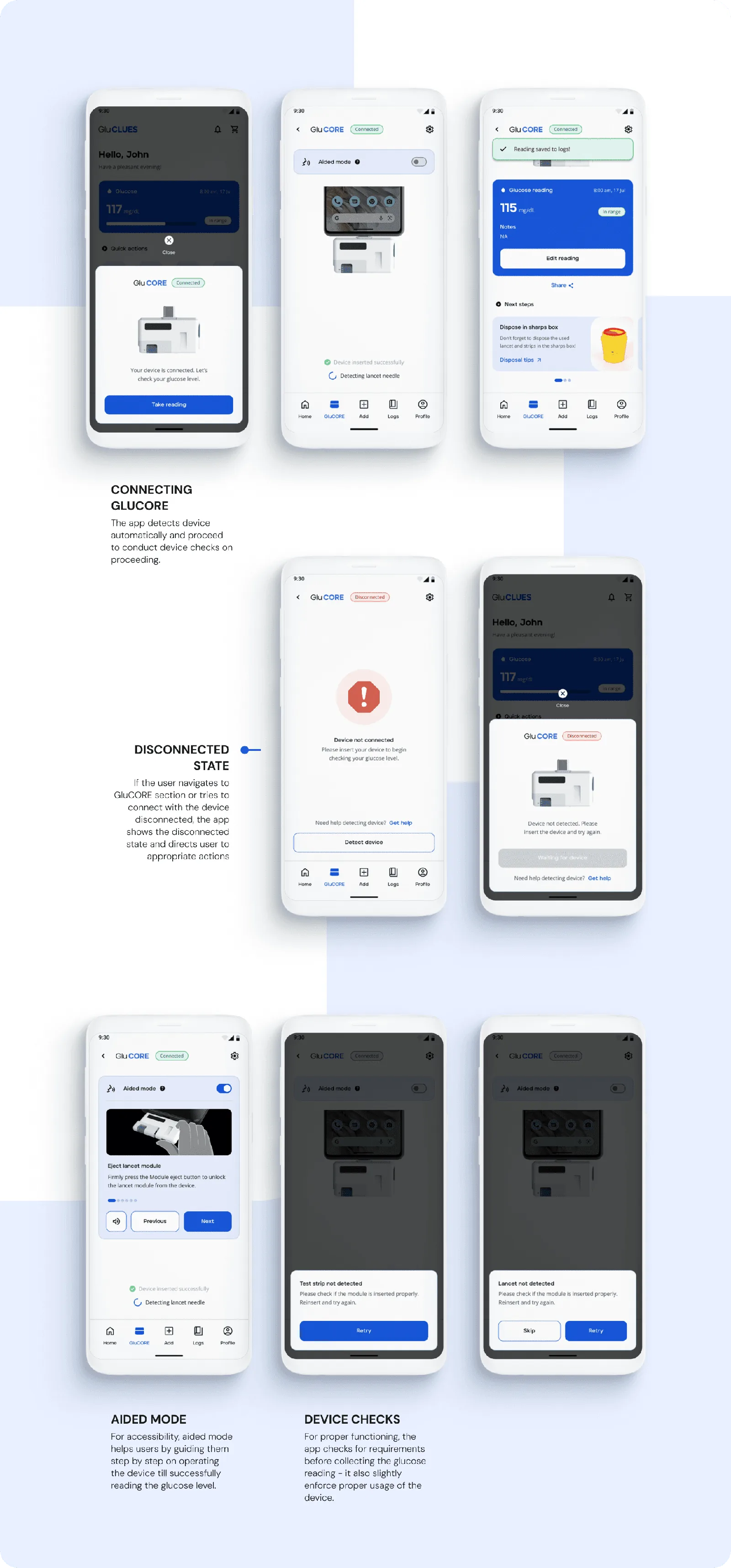
The app concept includes aided mode and device checks. Aided mode walks through the measurement steps, while checks provide a place to respond to device issues.
These screens address a specific concern raised by the personal starting point: a reading can be difficult to obtain if the person is unsure what the device expects next. Their effectiveness remains to be tested with intended users.
Make recording part of the same routine.
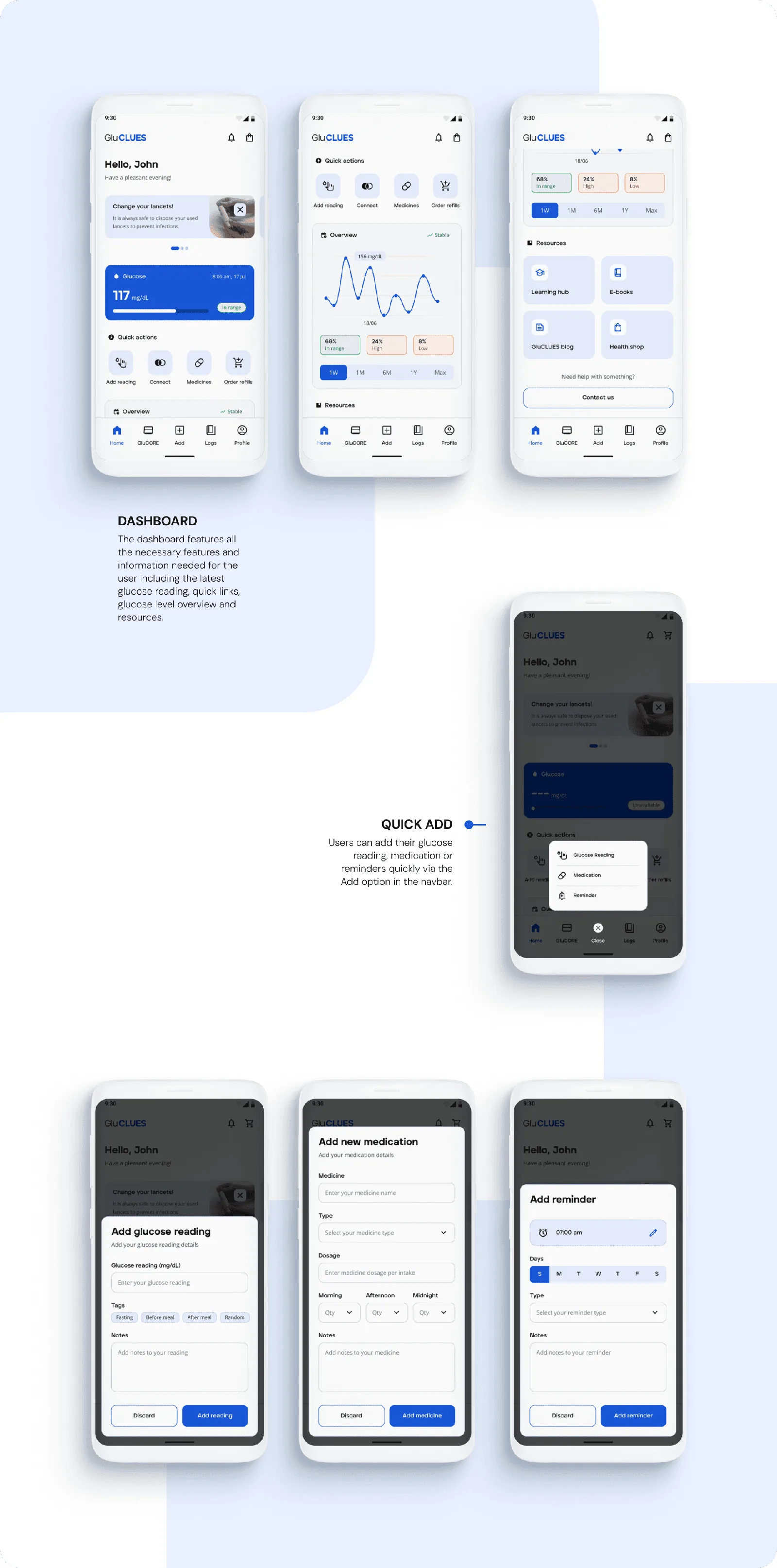
The app brings the latest reading, trends, and quick-add actions together. Manual entries include glucose readings, medication, and reminders, while logs retain recorded information.
The research connection is the effort of keeping a useful record after measurement. The proposed experience must still establish whether its labels, entry steps, and reports work for the intended audience.
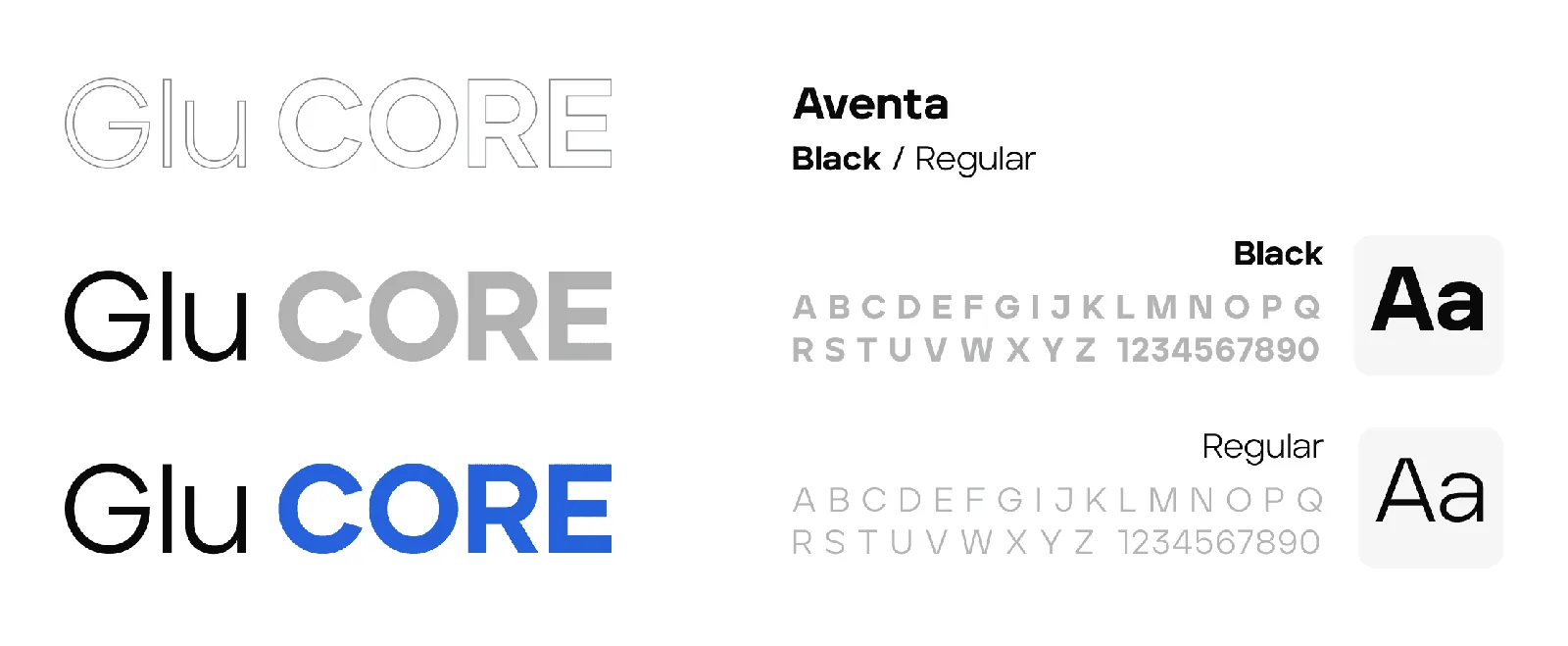
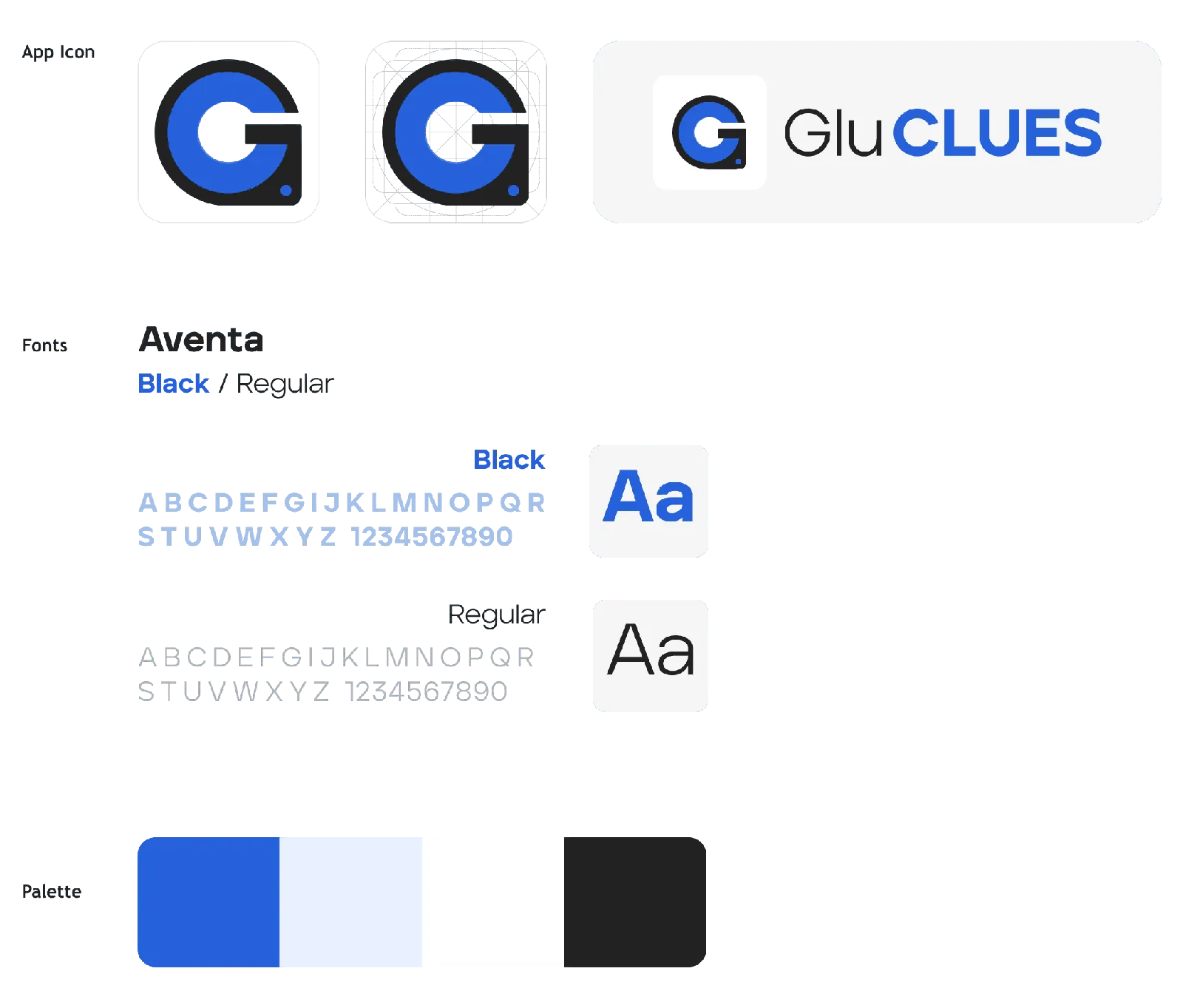
Explore the visual identity studies
Device and app branding are retained alongside the decisions, without interrupting the measurement journey.
Guided measurement
From preparing the device to keeping a record.
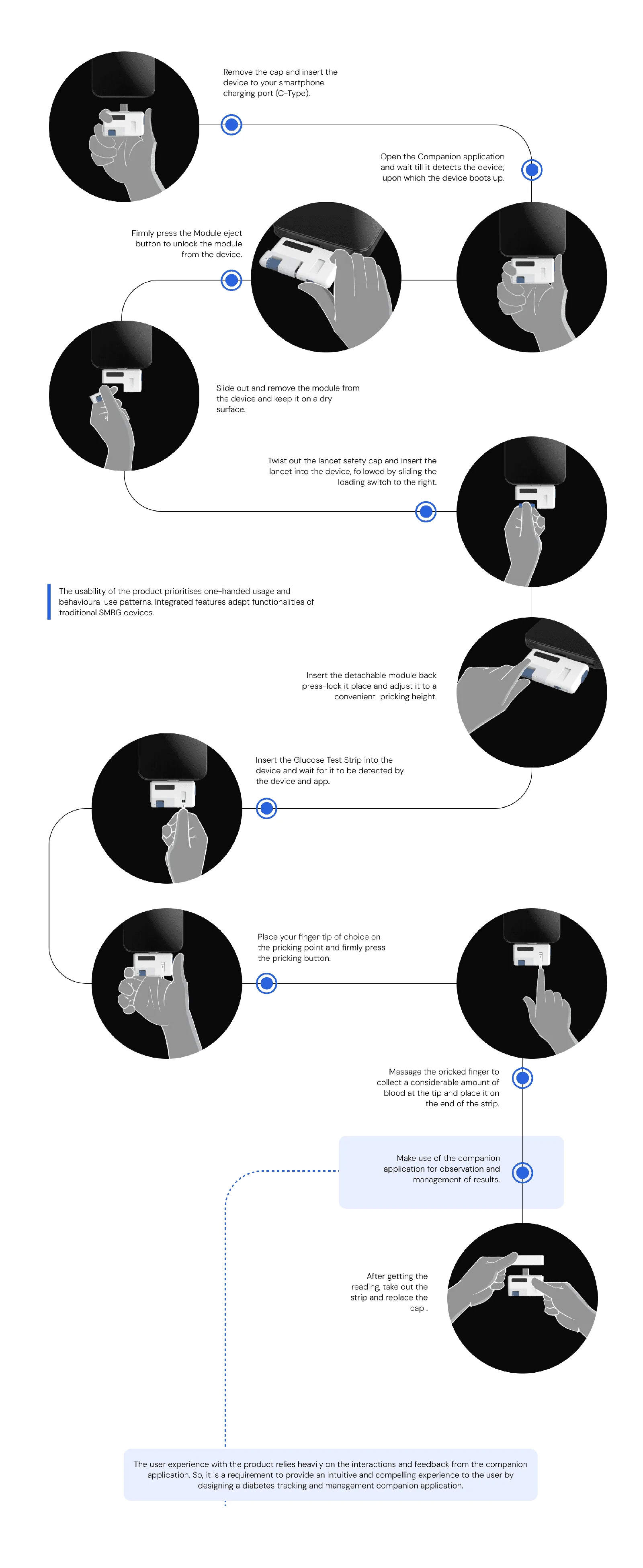
See the preparation and connection sequence
The original use sequence and setup screens make the physical and digital handover visible.
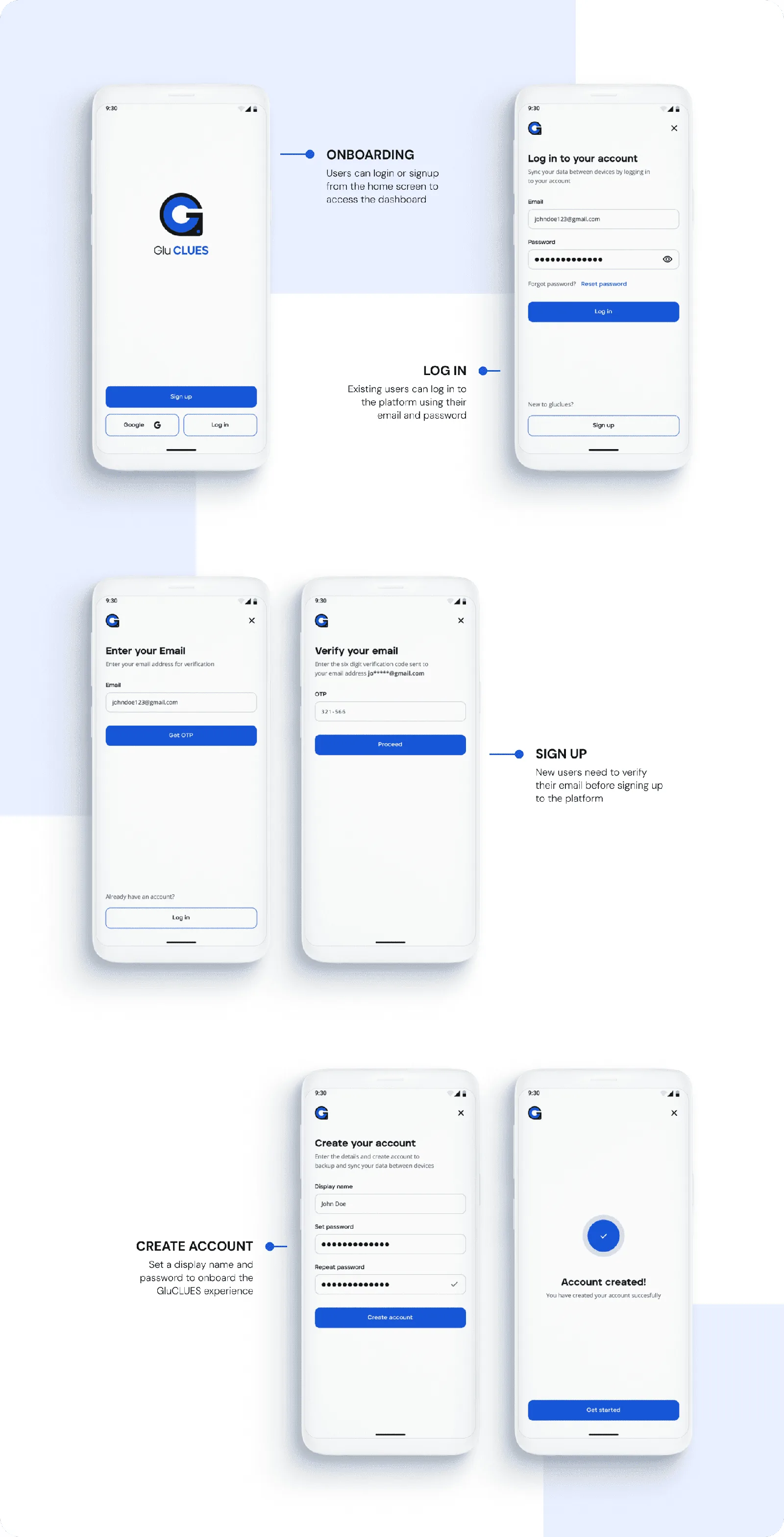
Prepare and connect.
The concept connects through the phone’s USB-C port. The user prepares the detachable pricking module, adjusts it, and inserts a test strip. The app guides the sequence and reflects the device’s connection state.
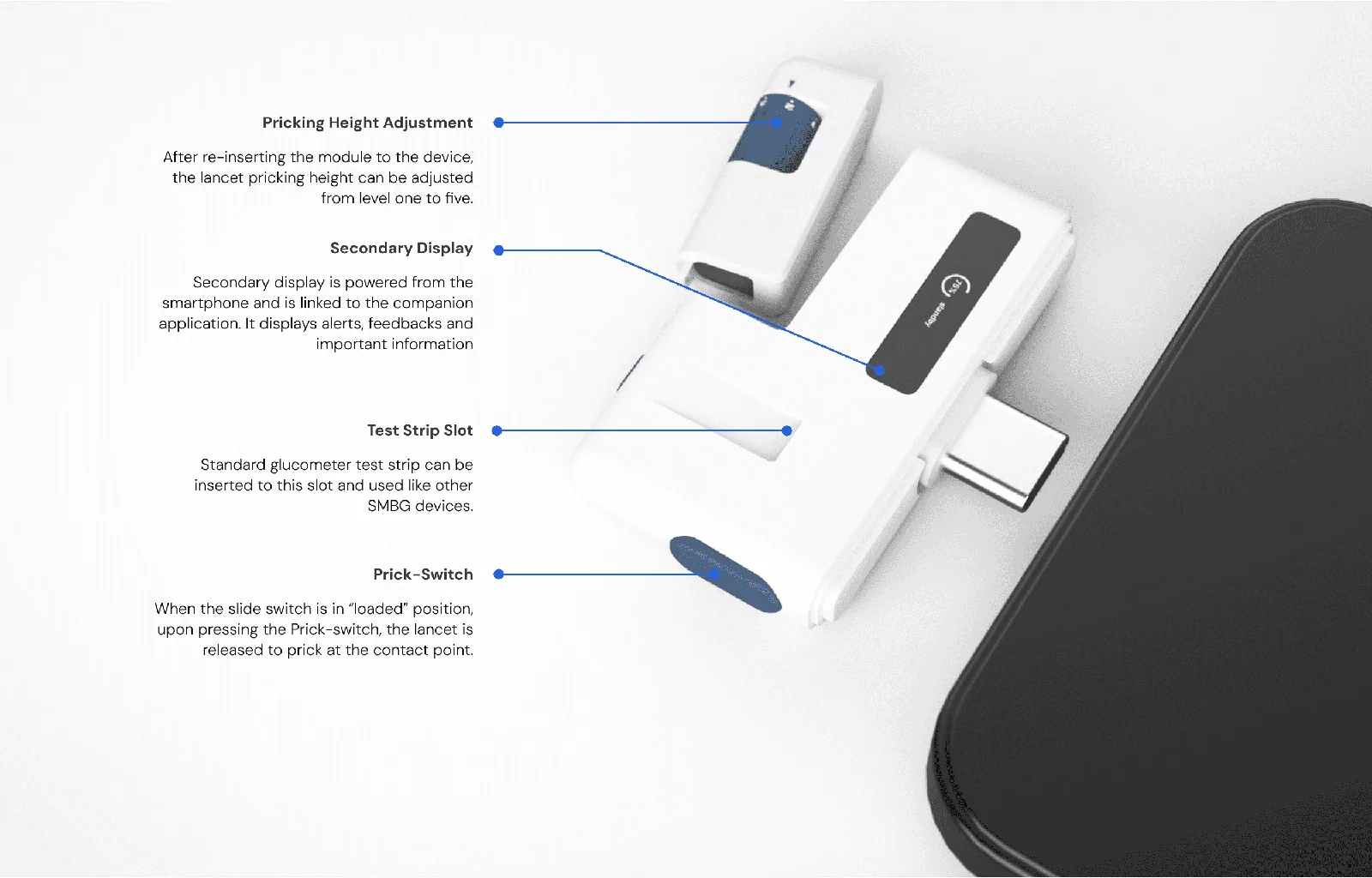
Measure with guidance.
The user follows the concept’s guided measurement sequence. Aided mode provides step-level support, while device checks address the connection and device state. These are design proposals rather than validated operating instructions.
Return to the record.
The dashboard and logs allow the reading to sit alongside earlier entries and related information. The broader concept includes reminders and learning resources; the main task remains taking and retaining a reading.
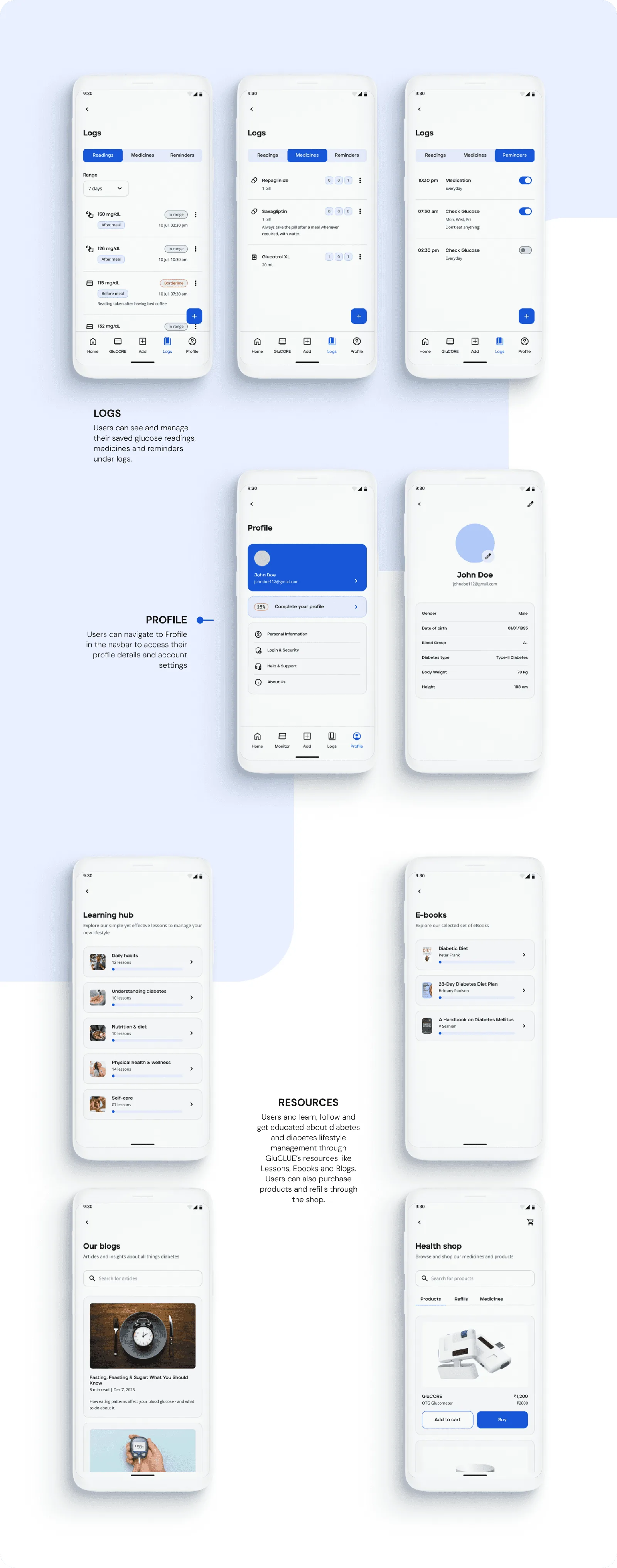
Thesis outcome
A connected product and app concept.
The six-month solo thesis produced a digital device concept, product renders, an intended use sequence, and companion-app screens. There was no physical prototype and no interaction or usability testing. The work presents a design proposal for further validation.
Next steps include validating the device and app together, developing a carry solution, and planning the product-service infrastructure.
Next questions
The connection is also the main assumption to test.
Using the phone creates room for guidance and records, but also makes a basic measurement depend on another device. That is the central tradeoff to examine before adding more lifestyle features.
A next study could observe intended users preparing the device, recovering from a disconnect, and finding a previous reading. The questions are whether they understand the feedback and can complete the routine with appropriate support.